Banning electric fatbikes?
Full title: Banning electric fatbikes? Biomechanics and injury risk. (Förbud mot elektriska fatbikes? Biomekanik och skaderisk.)
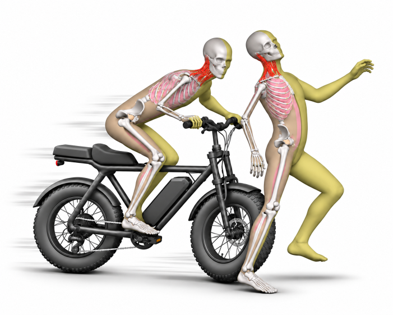
Electric fatbikes are increasingly popular. However, their vehicle design and potentially higher speeds raise safety concerns. Amsterdam has already restricted their use in certain areas following rising accident numbers, yet fatbike-specific injury data remain limited in Sweden. Premature bans could discourage active mobility, while insufficient regulation could increase serious injuries. This project uses Human Body Models (HBMs) to simulate single-bicycle crashes and cyclist–pedestrian collisions involving electric fatbikes, conventional e-bikes, and regular bicycles. By investigating how speed, mass, and vehicle design affect injury outcomes, the project aims to identify key risk factors and provide scientific evidence to support effective safety regulations, improved protective equipment, and safer active mobility.
Traffic safety benefit: This project will provide scientific evidence on how speed, vehicle mass, and design influence injury risks in micromobility crashes, particularly those involving electric fatbikes. The findings will support evidence-based safety regulations, vehicle and protective equipment improvements, and targeted interventions to reduce serious injuries among vulnerable road users while preserving the benefits of active mobility.
Connection to other projects: Human Modeling for Micromobility Safety
Key words: Electric fatbike, E-bike, Vulnerable Road Users (VRUs), Injury Biomechanics, Human Body Modeling (HBM), Traffic Safety, Crash Simulations