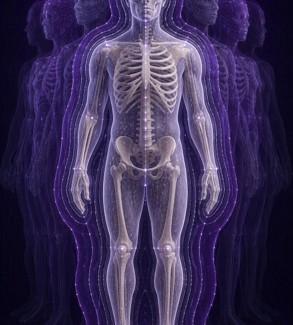
Full Body SSM and Morphing
Full title: Human Body Model Morphing for Safety Assessment Across Occupant Variability and Seating Postures
Vehicle safety assessment has long relied on a limited set of standardised anthropometries, despite large real‑world variation in sex, age, body composition, posture and injury risk. Human Body Model (HBM)‑based virtual testing is now entering consumer safety ratings, while automated vehicles introduce many more seating positions and use cases that physical testing cannot cover. This creates an urgent need for anatomically grounded and standardisable representations of human variability, before rating and regulatory practice solidifies around fragmented legacy morphing methods.
Building on long‑standing collaboration between Chalmers University, Sahlgrenska University Hospital and Autoliv, including several projects on statistical shape models and HBM morphing, the project will deliver a coherent, posture‑aware full‑body morphing framework integrating skeletal geometry and external body shape. Updated reference anthropometries for female and male occupants, including overweight and obese body compositions will be defined and demonstrated using finite‑element HBMs in safety‑relevant scenarios.
The outcomes enable population‑level, rating‑relevant virtual safety assessment, address equity gaps, and support harmonisation of HBM‑based verification methods for safe automation. Results will be disseminated through scientific publications, international conferences and an external international reference group.
Traffic safety benefit: The project will improve traffic safety by enabling virtual crash testing that better represents the diversity of vehicle occupants, including females, overweight and obese individuals, and occupants in reclined or non-standard seating positions. This supports the development of restraint systems that provide robust protection for a broader population.
Key words: Human Body Models, Statistical Shape Modelling, Population-Based Morphing, Occupant Safety, Virtual Crash Testing