Ban electric fatbikes – or make them safer? New research explores the actual injury risks
Electric fatbikes are gaining popularity, but their growing presence on roads and cycle paths is also raising safety concerns. Are these vehicles more dangerous than conventional bicycles and e-bikes? How do their weight, design and speed influence the severity of injuries? And do we have enough scientific evidence to make informed decisions about restrictions and regulations? A new SAFER partner project at Chalmers University of Technology aims to investigate these questions.
Growing popularity and growing safety concerns
Electric fatbikes, typically characterised by their wide tyres, relatively heavy frames and electric assistance, have become an increasingly visible part of urban mobility. While they offer new transport opportunities, concerns are growing about their potential consequences in traffic crashes, particularly for vulnerable road users.
The debate has already led to regulatory action in Europe. In May 2026, Amsterdam introduced a ban on electric fatbikes in the popular Vondelpark following reports of accidents, near misses and unsafe interactions with other park users. An evaluation published in October showed that the number of fatbikes in the park had fallen substantially and reported nuisance had decreased. The city decided to maintain the local ban.
But restrictions also raise important questions. Could banning certain bicycle types unnecessarily discourage sustainable and active mobility? Or could insufficient regulation expose cyclists and pedestrians to increased risks of serious injury?
In Sweden, fatbike-specific injury data remain limited, making it difficult to establish how these vehicles compare with other bicycle types in terms of crash severity.
What actually happens in a crash?
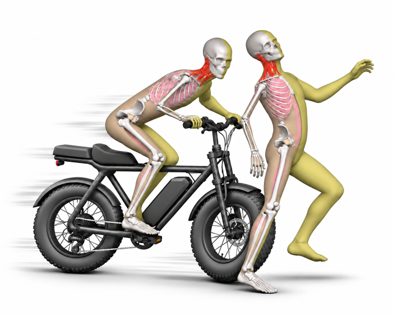
The new research project, Banning Electric Fatbikes? Biomechanics and Injury Risk, will investigate how different bicycle characteristics influence injury outcomes. Researchers will compare electric fatbikes, conventional e-bikes and regular bicycles, focusing on three key factors: speed, vehicle mass and design.
The study will examine two important crash scenarios:
- Single-bicycle crashes, investigating the potential injury consequences for the cyclist.
- Cyclist–pedestrian collisions, exploring how different bicycle characteristics may affect injuries to pedestrians.
Using advanced computational simulations with SAFER HBM and VIVA+ Human Body Models, researchers will investigate injury mechanisms and how crash conditions influence the risks faced by vulnerable road users. The approach makes it possible to explore crash scenarios systematically and better understand the relationships between vehicle characteristics and injury severity.
From uncertainty to evidence-based road safety measures
The project aims to provide knowledge that can support decisions about how emerging micromobility vehicles should be designed, used and regulated.
By identifying which factors contribute most to injury risks, the findings could help inform:
- More effective and proportionate safety regulations.
- Improvements in bicycle design and protective equipment.
- Targeted measures to reduce serious injuries among cyclists and pedestrians.
- Safer integration of new micromobility solutions into the transport system.
Importantly, the research is not intended to determine whether electric fatbikes should simply be banned. Instead, it seeks to provide a stronger scientific basis for assessing risks and identifying appropriate safety measures.
New knowledge for safer micromobility
The project contributes to SAFER's impact area Human Body and Mind and connects to ongoing research on human body modelling and micromobility safety at Chalmers University of Technology. It also addresses a broader challenge for road safety research: how can we respond to rapidly changing mobility trends without compromising either safety or the benefits of active transport? Through the SAFER collaboration platform, the findings can support knowledge exchange and discussions between researchers, industry and public authorities about future safety requirements, vehicle design and injury prevention.
As new forms of mobility emerge, understanding their actual safety consequences becomes essential. Better evidence enables better decisions – and ultimately safer mobility for everyone.
The project is led by Shinya Abe at Chalmers University of Technology, funded by Skyltfonden at the Swedish Transport Administration (Trafikverket), with a budget of SEK 583,000. It will run from February to July 2027.