Barn, Liv och Trafik 2026 successfully completed
Today we hosted Barn, Liv och Trafik at Lindholmen Conference Centre in Gothenburg: a full day bringing together practitioners, researchers and decision-makers to talk about children and young people’s everyday mobility, and what it takes to make cities safer, healthier and more liveable.
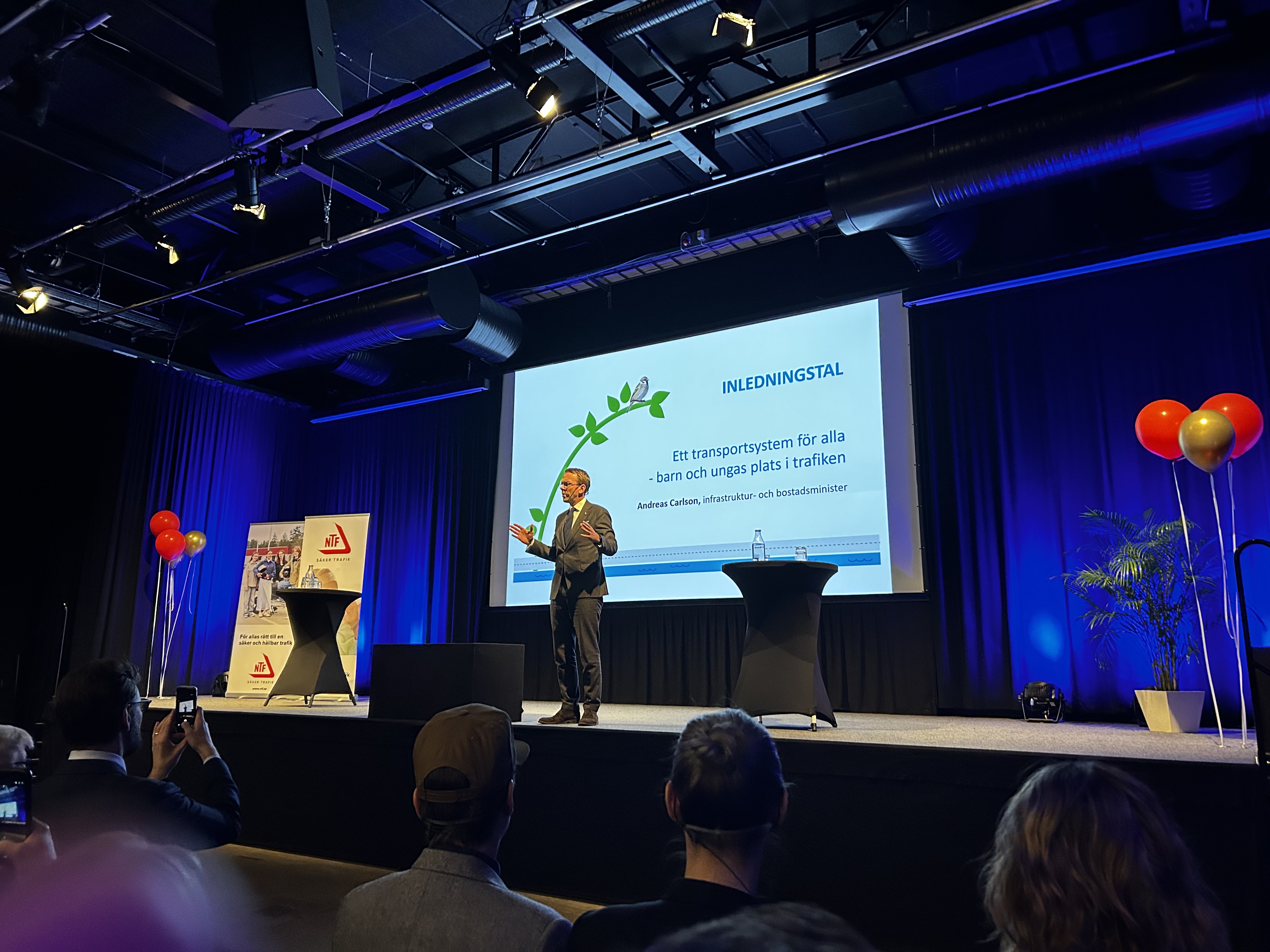
A strong opening message from Minister for Infrastructure and Housing Andreas Carlson:
- Sweden should keep sharing Vision Zero internationally and use our knowledge to reduce deaths and serious injuries.
- Collaboration is the success factor. What we do matters, and we have a moral responsibility to keep the momentum and stay in the lead.
- Put children’s place in the transport system higher up in strategic planning, and treat road safety as a foundation that supports many other sustainability goals.
- A clear priority on safe school routes, and a call for municipal leadership teams to step up and embed road safety in urban planning.
Key take-aways from the day:
1) The UN Convention on the Rights of the Child is law. So what does that mean for urban planning?
In practice, it means “children’s best interests” must be visible in decisions. It also means dealing openly with goal conflicts, for example convenience for car commuters versus children’s safety and independence.
2) Car-free school zones can change more than the street outside the gate
When you reduce car traffic around schools, traffic often drops in the wider area too. Schools and guardians tend to be very positive. Those who commute by car are less so, which is unsurprising when the perspective shifts. These spaces also create value beyond school hours. Compliance is the hard part. High compliance is what makes it truly safe.
3) We need methods, tools and coordination to scale what works
Many examples showed that progress requires coordination across sectors like transport, education, public health and social sustainability. Another important message was to actively seek out the knowledge that already exists. There are strong knowledge clusters to learn from.
4) School trips get attention. Leisure trips deserve far more
A really interesting track was leisure travel versus school travel. Leisure trips are shaped by norms, identity, time pressure and social factors, and they are often barely on municipal agendas compared with school routes. Big potential here. The decisive factor is often parents’ perceived safety. Success also depends on cross-department collaboration, clearer responsibilities, early involvement, and surprisingly practical things like storage for sports equipment at school.
5) Injury patterns were a wake-up call
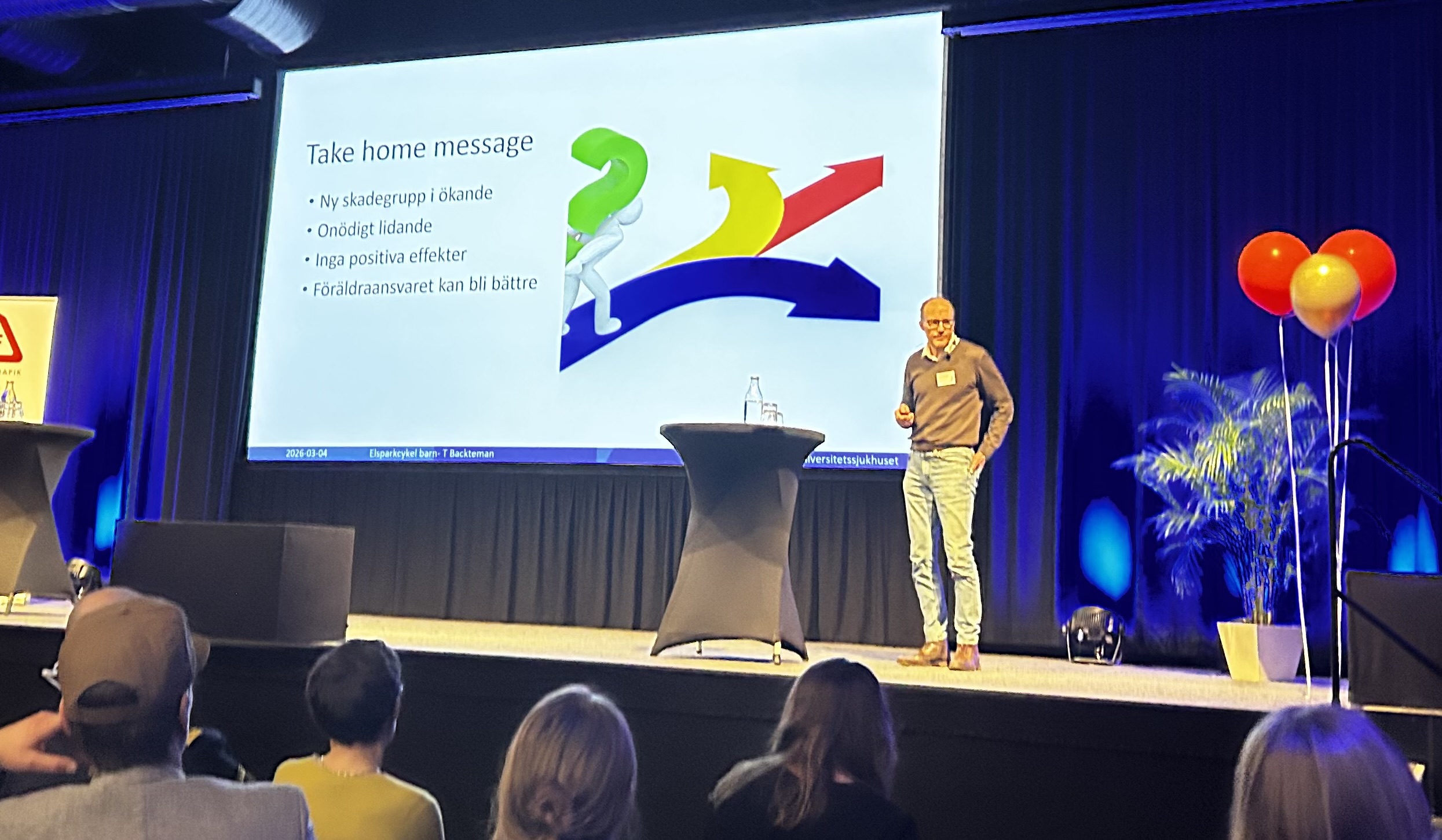
For pedestrians, falls dominate. For others, cycling injuries are common, and e-scooter injuries are rising fast. Many incidents happen on the way to and from school. Single crashes are common, but conflicts with motor vehicles increase as children get older.
6) Safe crossings are crucial, and simple guidance helps
Only 2 in 10 children reach daily physical activity targets. Many have less than 2 km to school. Safe crossings are key. A practical example that stood out was marking and communicating a recommended “school route” with safe crossings, and involving children and guardians in the process.
7) E-scooters were a major focus, with very clear messages
There was broad support in the room for exploring age limits and helmet requirements. The Nordic comparison was also striking: in Finland, Denmark and Norway, e-scooters are treated more like small motor vehicles, which changes what can be required. A trauma surgeon from Sahlgrenska delivered a deeply moving, blunt message about severe injuries in children. Police also highlighted that many adults do not know the rules, and that faster e-scooters can be a status symbol among teenagers.
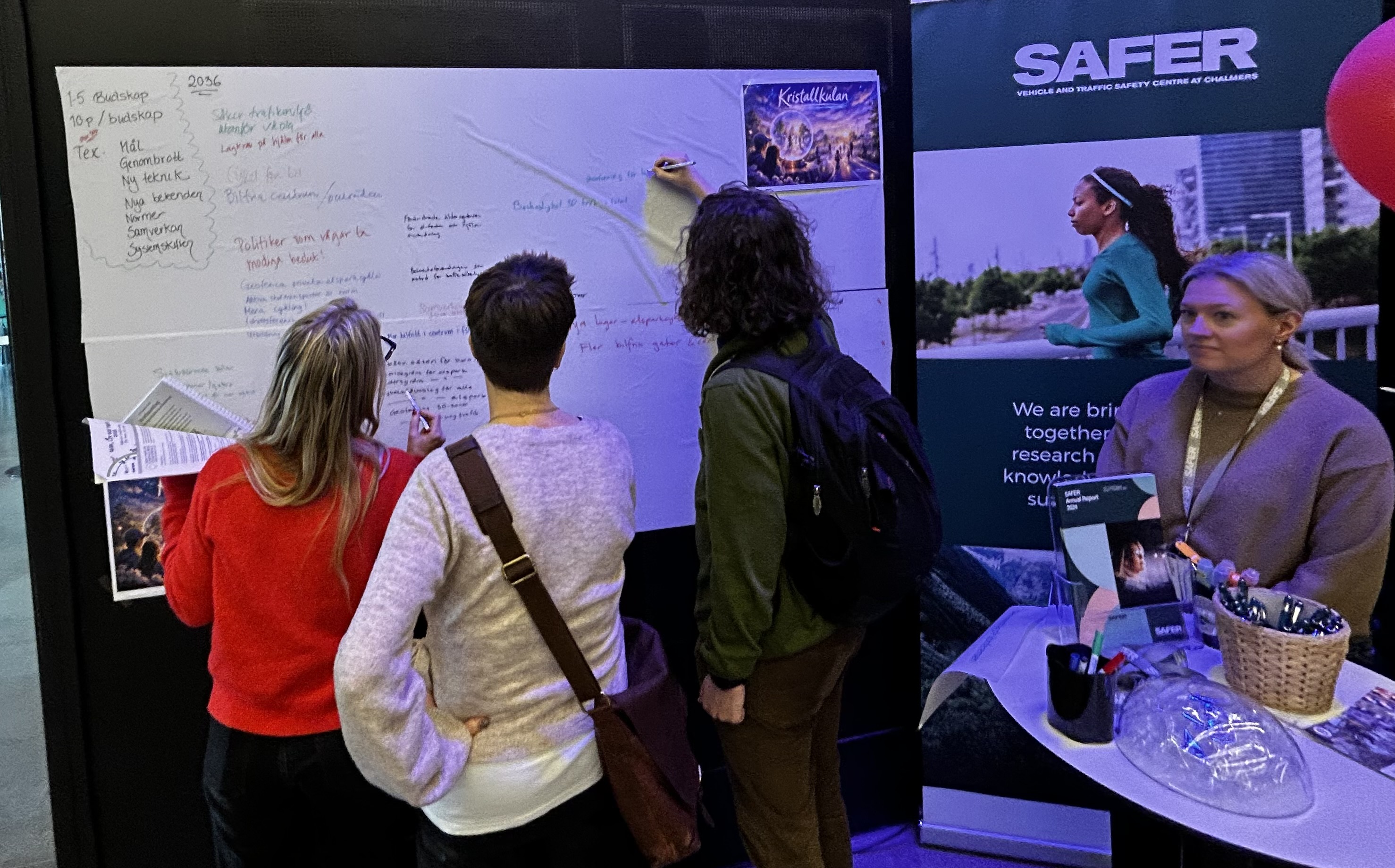 Crystal Ball 2036 (walking conference)
We also ran a walking “Crystal Ball” session, collecting visions for what child-friendly mobility could look like in 2036. The strongest signals converged around lower speeds and clearer urban zones (30 km/h as the baseline in urban areas, and 20 km/h in selected streets), car-free city centres and car-free school zones, and a big push to make walking and cycling the norm for children’s everyday trips. Another recurring theme was smarter governance and regulation: wider use of geofencing to manage speed and access (including around schools and for heavy vehicles), stronger rules for e-scooters and micromobility (often framed as motor vehicles, with age limits and education), and broader expectations on helmets and safety culture, backed by braver decisions, better coordination, and clearer responsibility across sectors.
The conference was hosted by NTF Väst, City of Gothenburg and SAFER.
You can access the material from the conference here!
A big thank you to the organisers and everyone who contributed to thoughtful program at Lindholmen!