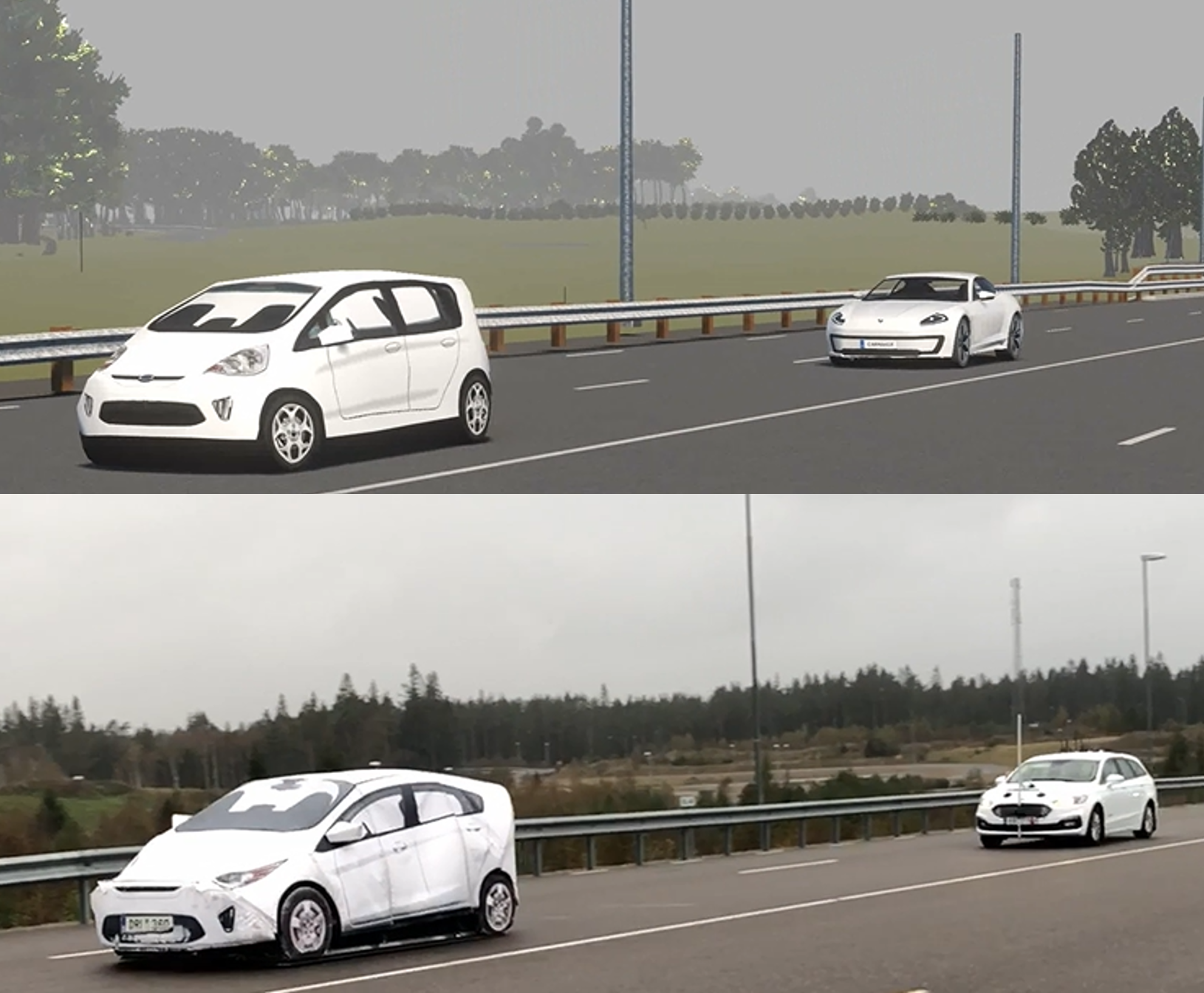
Can we trust a crash test that only happens in a computer?
Testing new safety systems in cars usually involves a lot of driving, test-track work and physical testing. But what if much of this could be done virtually, in a computer, before a vehicle or system is fully developed? That is the aim of the research project EVIDENT 2, which is now part of SAFER’s partner project portfolio.
Modern vehicles include more and more driver assistance systems, often called ADAS, and vehicles are also becoming increasingly automated. These systems need to work in many different traffic situations. A pedestrian may suddenly step into the road. A car in front may brake hard. It may be dark, raining or difficult to see what is happening at a junction.
Testing every possible situation on a test track or in real traffic takes time and costs a lot of money. In a simulation, the same situation can be created digitally and tested again and again, with small changes in speed, distance, weather or traffic behaviour.
But there is one important question: How do we know that what happens in the virtual world would also happen in real life? This is what EVIDENT 2 is working to find out.
Making virtual testing more reliable
The project will develop methods for checking how reliable simulations are. Results from virtual tests will be compared with results from physical tests. This will help researchers understand where simulations work well, where they need to be improved and how their reliability can be measured.
If this works well, more safety testing could be done virtually in the future. That could reduce costs, speed up development and make it possible to test many more situations much earlier.
EVIDENT 2 is carried out by AstaZero, IPG, Volvo, Aptiv and Mid Sweden University. It is funded by Vinnova/FFI and runs from 2026 to 2028. The project builds on the earlier EVIDENT project.
Why consumer testing matters
The project also works closely with organisations involved in independent vehicle safety testing, such as Euro NCAP.
Consumer tests are important because they make complicated safety technology easier to understand and compare. A person buying a car cannot easily judge how well an automatic braking system works or how well a car can avoid a crash. Independent tests give consumers a clearer picture. These tests also affect vehicle development. Car manufacturers want good safety ratings, so the tests can push them to improve their systems and introduce better safety features.
If virtual testing is to become part of this type of assessment, the simulations must be trusted. It must be possible to show that a digital test gives results that are close enough to what would happen in the real world. This is one area where EVIDENT 2 can make a difference.
SAFER helps the results reach further
By connecting EVIDENT 2 to SAFER, the project becomes part of a wider road safety network.
This gives the project access to researchers, companies, public authorities and other organisations that can contribute with knowledge and different perspectives. It also creates more opportunities to discuss results, identify new questions and share what the project learns outside the project group. SAFER can also help spread the results through seminars, research events, its website, newsletters and other activities.
For a project like EVIDENT 2, this is important. It is not enough to develop a good method. The people who may use it also need to understand it and trust it. Bringing the project into the SAFER community gives more people a chance to follow the work, discuss the results and use the knowledge in practice.
In the end, EVIDENT 2 is not simply about replacing physical tests with computer simulations. It is about finding better ways to test more situations, earlier and more efficiently, while still being confident that the results reflect real life.