EARS: A new partner project – sound that helps more people travel safely
Imagine this. You have booked a shared ride in your phone. The vehicle is arriving, but there’s no driver to wave, answer questions, or help you find the right door. You are in a busy street. Bikes pass close by. Cars stop and start. You are not quite sure where to stand, when it’s safe to cross, or if you are getting into the right vehicle. For many people, this is stressful. For someone with a visual impairment, it can be the difference between being able to travel — or not.
This is the problem the new SAFER partner project EARS – Enhanced Auditory Reality Scout wants to solve.
What EARS will do
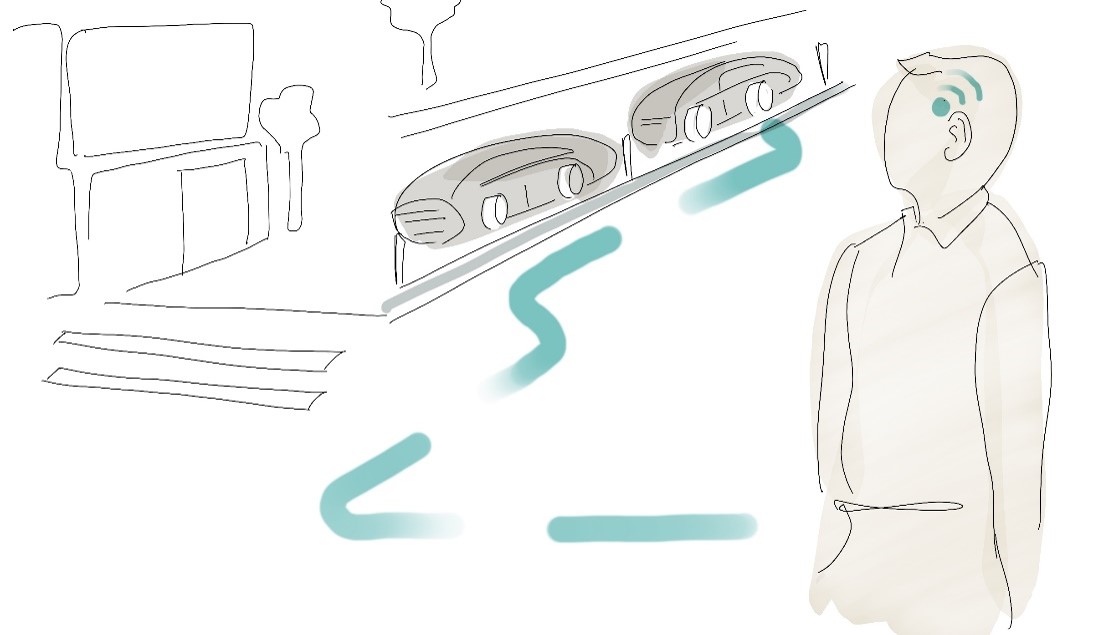
EARS will develop and test a prototype that uses guiding sound in headphones — like a “friendly audio guide” to support a person throughout the whole trip:
- from booking the ride
- to finding the pick-up point
- to boarding safely
- to getting off at the right place
- and reaching the final destination
The sound will be 3D, so it can feel like it comes from a direction (for example “the pick-up point is over there”), without needing to stare at a screen.
Why this matters for traffic safety
Good guidance can reduce risk in simple, practical ways:
- Less confusion in traffic. If you know exactly where to go, you are less likely to make hurried decisions in busy environments.
- Less screen use. Fewer moments looking down at a phone means more attention on what’s happening around you.
- Safer pick-up and drop-off. Clear audio instructions can help people choose safer places to stand, walk, and cross.
- More inclusive mobility. If shared mobility works for people with different needs, more people can travel safely and independently.
Tested with real users — in real environments
EARS will build a demonstrator and evaluate it in a realistic setting with users who have different functional conditions, with a particular focus on people with visual impairments. The project will also define what is needed to scale the solution into a real product.
One of the use cases will include a journey connected to tourism, exploring how transport and visitor experiences can be linked to make the trip itself smoother and more enjoyable.
Project set-up
EARS is funded by FFI (Transport and mobility services) and runs from 1 Nov 2023 to 31 Jan 2026. The project is led by Volvo Cars and carried out together with RISE, Ictech, Arctic Bath, and Polar Print.
Contact: Per Alenius, Volvo Cars – per.alenius@volvocars.com