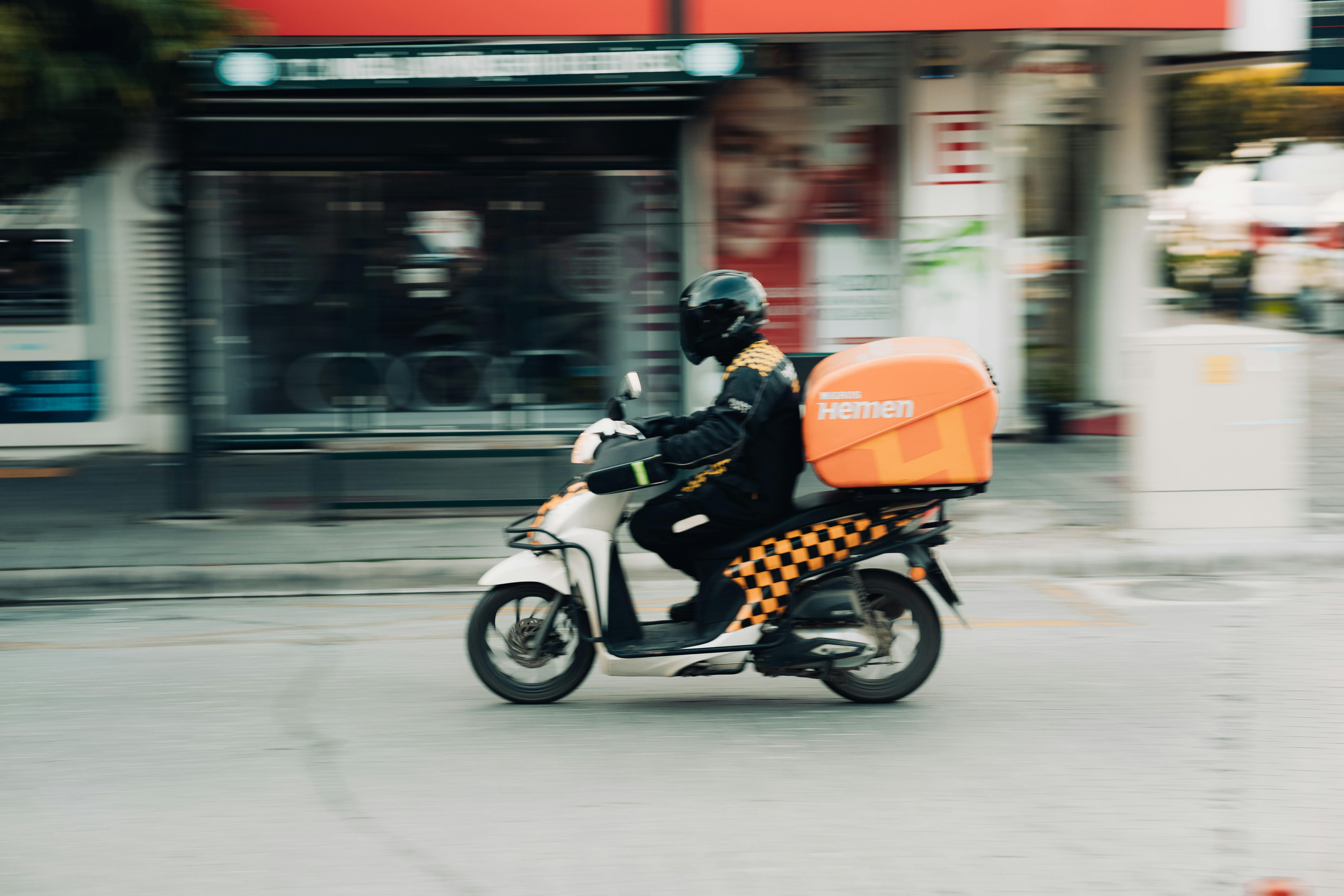
New partner project in the SAFER portfolio highlights a growing road safety challenge on cycle paths
In many cities, the traffic environment is changing rapidly. New mobility patterns, platform-based services and increasing demand for fast deliveries are reshaping how public space is used, often faster than knowledge can develop about the consequences for road safety. One clear example is platform-based food deliveries, where Class II mopeds have become an increasingly common presence on cycle paths and in spaces primarily intended for cyclists and other vulnerable road users.
This raises important questions. Cycle paths are part of the transport system where many users are already in an exposed position, without the protection provided by a vehicle body. When new vehicle types and new patterns of use are introduced, the interaction between road users can change in ways that affect both actual safety and perceived security. In the public debate, several concerns have been raised, including speed, noise, spatial demands and the risk of creating a less safe and less comfortable environment for pedestrians and cyclists. At the same time, there is a clear need for more knowledge based on systematic study and real-world observation, rather than assumptions or isolated experiences.
This is precisely where the new partner project, Road safety effects of platform-based food deliveries on cycle paths (SÄKMAT), comes in. The project has now joined the SAFER partner project portfolio and addresses a timely and important issue at the intersection of urban mobility, human behaviour and road safety.
The aim of the project is, through a pilot study, to investigate how platform-based food deliveries by moped affect the safety of vulnerable road users on cycle paths. Through studies in Malmö and Lund, the project will map exposure, speeds and interactions, while also capturing vulnerable road users’ experiences of insecurity in these environments.
The road safety benefit of the project is clear. Through observational studies, new knowledge will be generated on relevant road safety indicators such as traffic flows, speeds, behaviours and interactions, together with information on perceived road safety. This will provide a stronger basis for understanding how this form of delivery traffic affects safety on cycle paths and which risks or challenges may need to be addressed in the future. In this way, the project can contribute to a more evidence-based approach to creating safer and more secure environments for cyclists and pedestrians.
The project mainly contributes to SAFER impact areas Human Body & Mind and Safety Performance Evaluation, and brings valuable perspectives to both. On the one hand, it concerns people’s experiences, behaviours and sense of safety in the traffic environment. On the other, it strengthens knowledge of how road safety can be observed, measured and analysed in an everyday context where new transport patterns are emerging.
The project is funded by the Swedish Transport Administration through Skyltfonden, runs from 2 February 2026 to 31 January 2028, and has a budget of SEK 475,392. The contact person is Martin Larsson at Lund University, Faculty of Engineering.
A central part of SAFER’s work is to create value by sharing knowledge. Having this project included in the portfolio means that insights, methods and results can be disseminated widely to researchers, authorities and other stakeholders. This gives more people the opportunity to learn from the project, build on its findings and contribute to the development of a safer transport system.
By making projects like this visible and accessible, we strengthen the shared knowledge base and create better conditions for addressing new and emerging road safety challenges.