
SAFER Partners’ spring show case: A confetti of project results, collaboration and future opportunities
SAFER Research Day Summary
On April 28, SAFER partners gathered at Lindholmen for a full day of presentations, discussions, and networking. The aim was simple: to share ongoing research results and explore how these can be taken further through collaboration.
The day brought together a wide range of projects across SAFER’s three so called Impact Areas: Human Body and Mind, Safety Performance Evaluation, and Safety Principles. Together, they provided a clear picture of where traffic safety research stands today and what challenges remain.
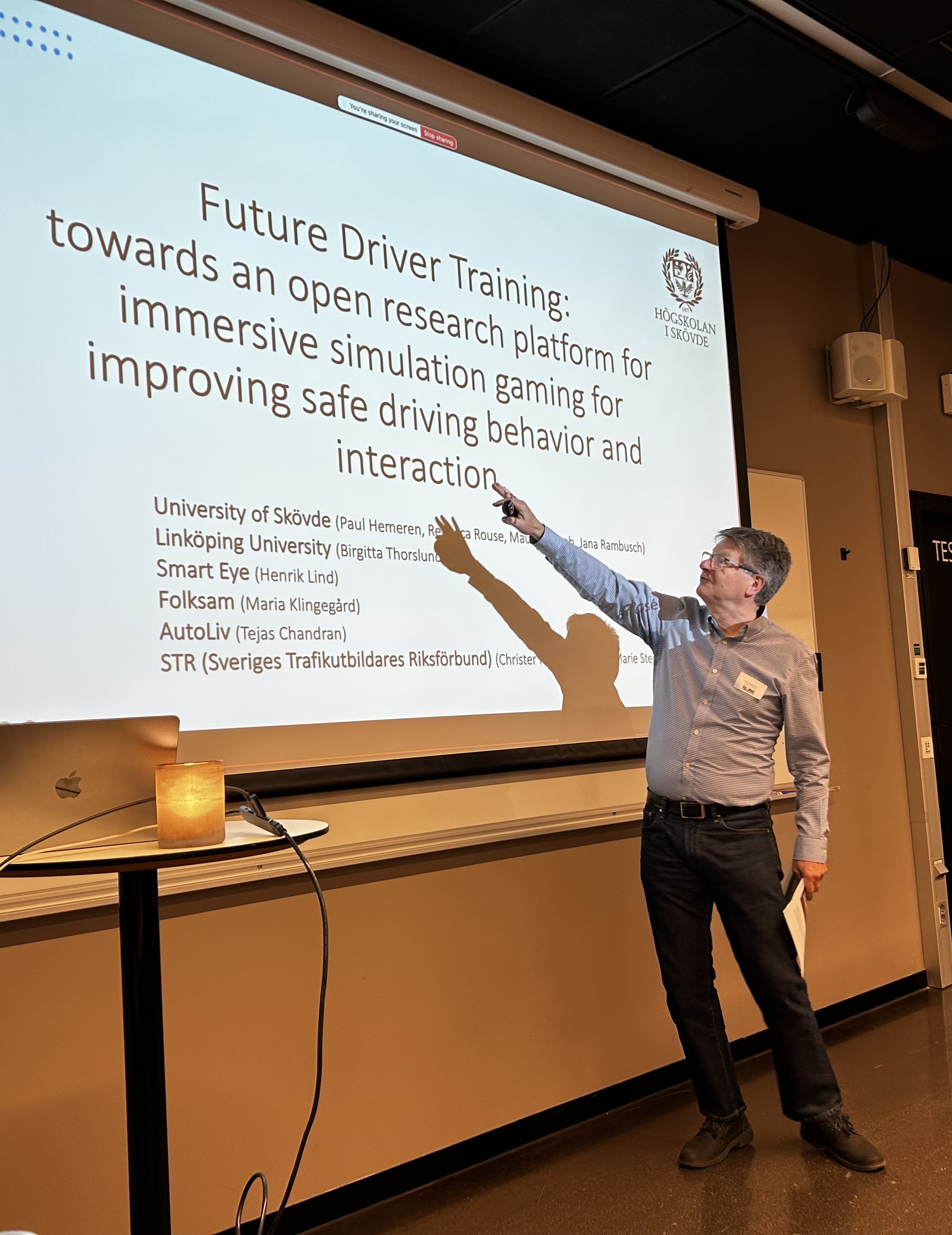
Human Body and Mind sessions highlighted that we need to better understand the human in the system. Whiplash injuries in frontal crashes are more common than expected and can lead to long-term consequences. ABS for bicycles shows promise but lacks real-world data. New approaches to driver training using simulation and gaming may improve behaviour, while detection of alcohol, drugs, and fatigue needs to focus on actual impairment rather than presence alone.
Safety Performance Evaluation focused on data, methods, and evaluation. New approaches to AI risk assessment aim to connect technical and organisational perspectives. Event data recorders with video could provide valuable insights, but access and regulation remain challenges. The real-world effectiveness of systems such as automatic emergency braking for heavy vehicles still needs further investigation. At the same time, the quality of accident data, particularly from hospital reporting to STRADA, remains a key issue.
Safety Principles sessions presented solutions closer to implementation. Automated bus depots show potential for improved safety and efficiency but require organisational changes. Research on connected and automated vehicles emphasised the importance of handling uncertainty in mixed traffic. The VERDAS project demonstrated strong impact, with results already influencing Euro NCAP 2026 test methods. Advances in positioning technologies also highlighted their importance for future safety systems.
Overall, the day showed that significant progress has been made. At the same time, key challenges remain: lack of data, need for more realistic testing, and the complexity of integrating technology, human behaviour, and systems.
The most important takeaway is that collaboration is essential. No single actor can solve these challenges alone. By bringing together partners from academia, industry, and public organisations, SAFER creates the conditions needed to move from promising results to real-world impact.