SAFER Research Day: Safe Infrastructure & Vulnerable Road Users – from “more walking and cycling” to long-term, scalable systematics
How do we design roads and streets that truly protect vulnerable road users while also supporting more walking and cycling? That question set the starting point for the year’s final SAFER Research Day, delivered as a hybrid half-day at Lindholmen Conference Centre, bringing together researchers and other societal stakeholders in dialogue on safety, sustainability, and delivery capacity.
Key insight from the keynote: it’s not only “road safety” – it’s also public health, city liveability, and the right logic for change
Sonja Forward, VTI & the Swedish Pedestrians’ Association, FOT, framed the morning with a clear message: if we are serious about a transport transition where more people walk, we must understand what actually drives mode choice and how change happens in practice. She connected three strands that are often treated separately: safety (including single-vehicle/single-person incidents), health, and environment/climate. Among other points, she highlighted that a substantial share of EU fatalities are pedestrians and that many pedestrian injuries occur in single incidents (falls), indicating that “Vision Zero for pedestrians” must address more than collisions.
Forward also brought a distinctly people-centred perspective to urban planning: accessibility, convenience, perceived safety/security, links to public transport, attractive and coherent walking networks, and measures that calm traffic and genuinely prioritise pedestrians and cyclists. She pointed to common barriers to change, planning based on the past rather than the future, fear of resistance, and an overreliance on “carrots” without also making car traffic harder where necessary and concluded that policy, a shared goal, and a long-term masterplan are essential.
A concrete example from Ghent illustrated the point: when street space is reallocated and priorities become clear, we can see reduced car traffic, increased cycling, improved air quality, and fewer crashes - without the city grinding to a halt. The conclusion for the Swedish context: design and governance must build for increased active mobility -not “manage it” once it happens to appear.
From research to implementation: four tracks shaping a more deliverable safe-infrastructure agenda
1) Infrastructure that interacts with technology—and with people
In SUperSafe, Carmelo D’Agostino, Lund University, presented an approach that links real-world environments with virtual methods to understand how infrastructure characteristics influence interactions between conventional road users and CAVs (connected and automated vehicles). The combination of simulator/VR, agent-based microsimulations, and non-crash-based indicators points to the next step in infrastructure: proactive safety evaluation before a crash occurs, but validated in real-world settings.
2) Capacity-building and “tools in practice” – also beyond Sweden
AfroSAFE demonstrated how tools and processes for Road Infrastructure Safety Management (RISM) can be built locally through guidelines, capacity development, and pilot projects. Examples were given of formal adoption/implementation of methods and standards across several countries, alongside training tracks to create long-term capability. The key takeaway: safe infrastructure is not only a design question - it is an institutional capability (standards, training, processes, responsibility).
3) The city as an innovation engine: from individual measures to systems
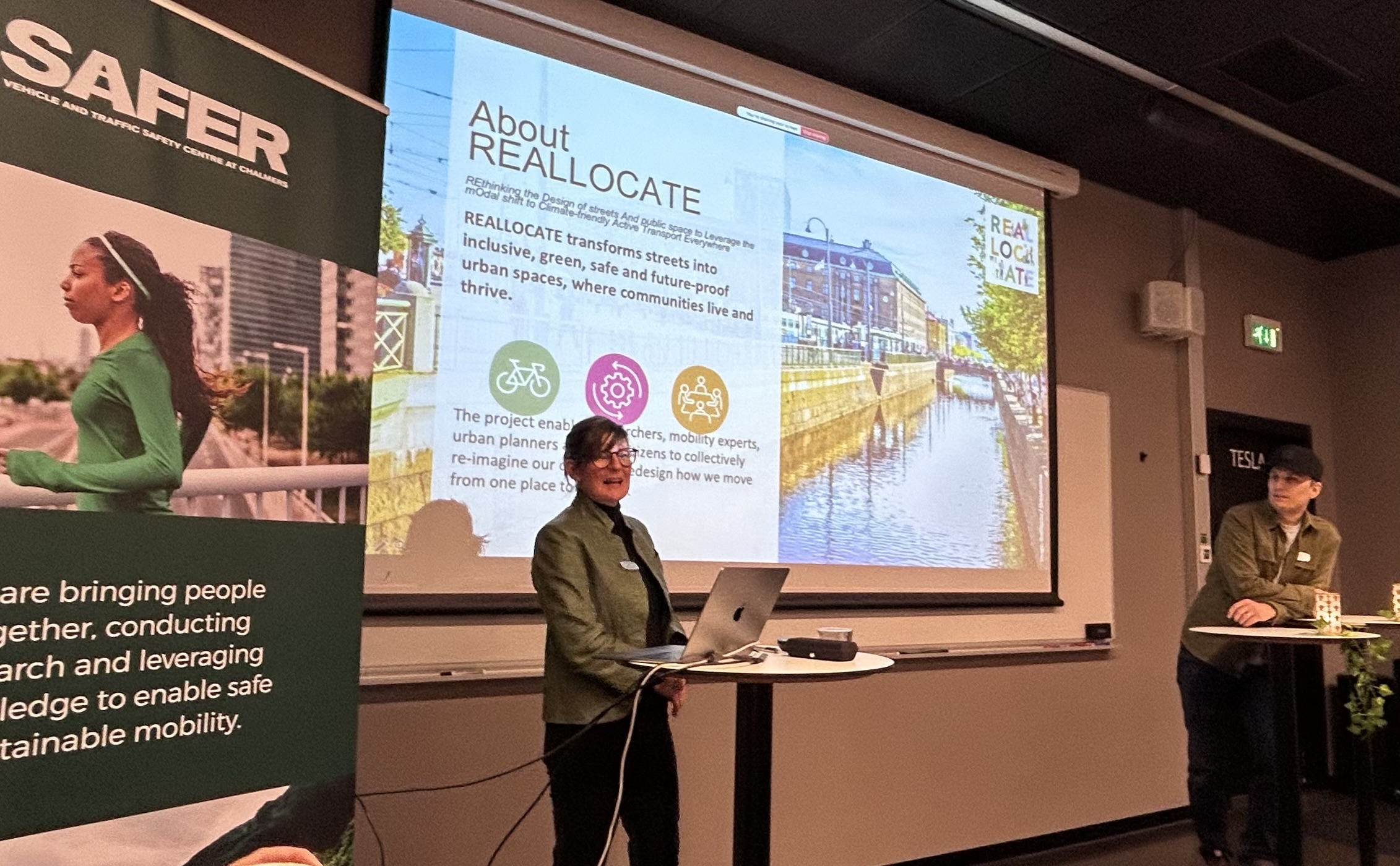
REALLOCATE (City of Gothenburg) placed the transformation in everyday realities: peri-urban children’s travel, travel patterns around event areas, and the digitalisation of temporary traffic arrangements. The pilots show how the Safe System Approach can be translated into local environments in collaboration with associations and families and how mobility is also a social experience, identity, and belonging, while safety concerns limit independent mobility. In the Korsvägen event district, the lesson is that impact often requires bundling and coordinated communication (public transport tickets, cycling measures, micromobility, partnerships), not isolated measures.
4) Municipal delivery power: from “a lot is happening” to “it happens systematically”
The FOI project Trafiksäkerhetslyftet and the SAFER Cities elements addressed a recurring challenge: municipalities do a lot, but the work is rarely systematic enough, measurable enough, or long-term. Trafiksäkerhetslyftet presented an audit/self-assessment logic covering roles (road authority, planners, employers, procurement, etc.) and areas such as planning, maintenance, worksites, communication, and procurement, plus an approach to measuring “road safety culture” (maturity/readiness). At the same time, an ongoing pre-study was presented on a SAFER Cities-type collaboration platform to build knowledge exchange between societal actors and research. Clear conclusion: we don’t just need more measures; we need better working processes to select, deliver, and follow up the right measures.
The walking ecosystem: a new national node and clear advocacy
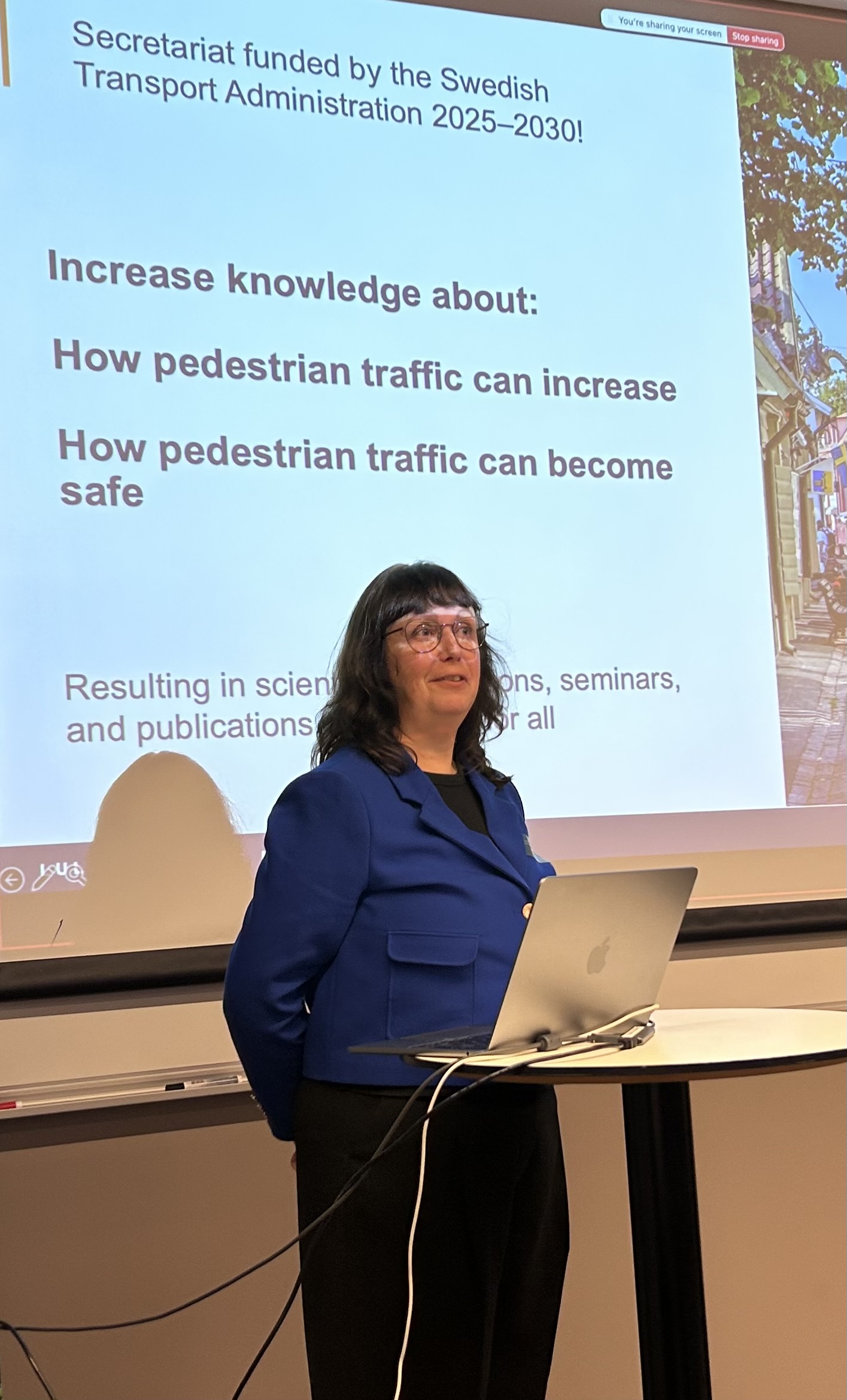
The newly established Walking Centre / research programme “Planning for Walking” at Luleå University of Technology was presented by Charlotta Johansson as a national hub where walking is treated as its own mode, and where knowledge will be built around, for example, fall prevention, data/indicators, responsibilities/organisation, socioeconomics, and social sustainability. This strengthens Sweden’s ability to move from ambition (“increase walking”) to governance (“measure, understand, and prioritise walking”).
Sonja Forward also presented FOT and their priorities, which cut into some of the toughest knots: the need for strategy and dedicated space for pedestrians, clearer rules/priority, lower baseline speeds in urban areas, and ensuring that falls and operations/maintenance become an explicit part of Vision Zero work.
The panel’s core question: why isn’t progress faster - despite strong knowledge?
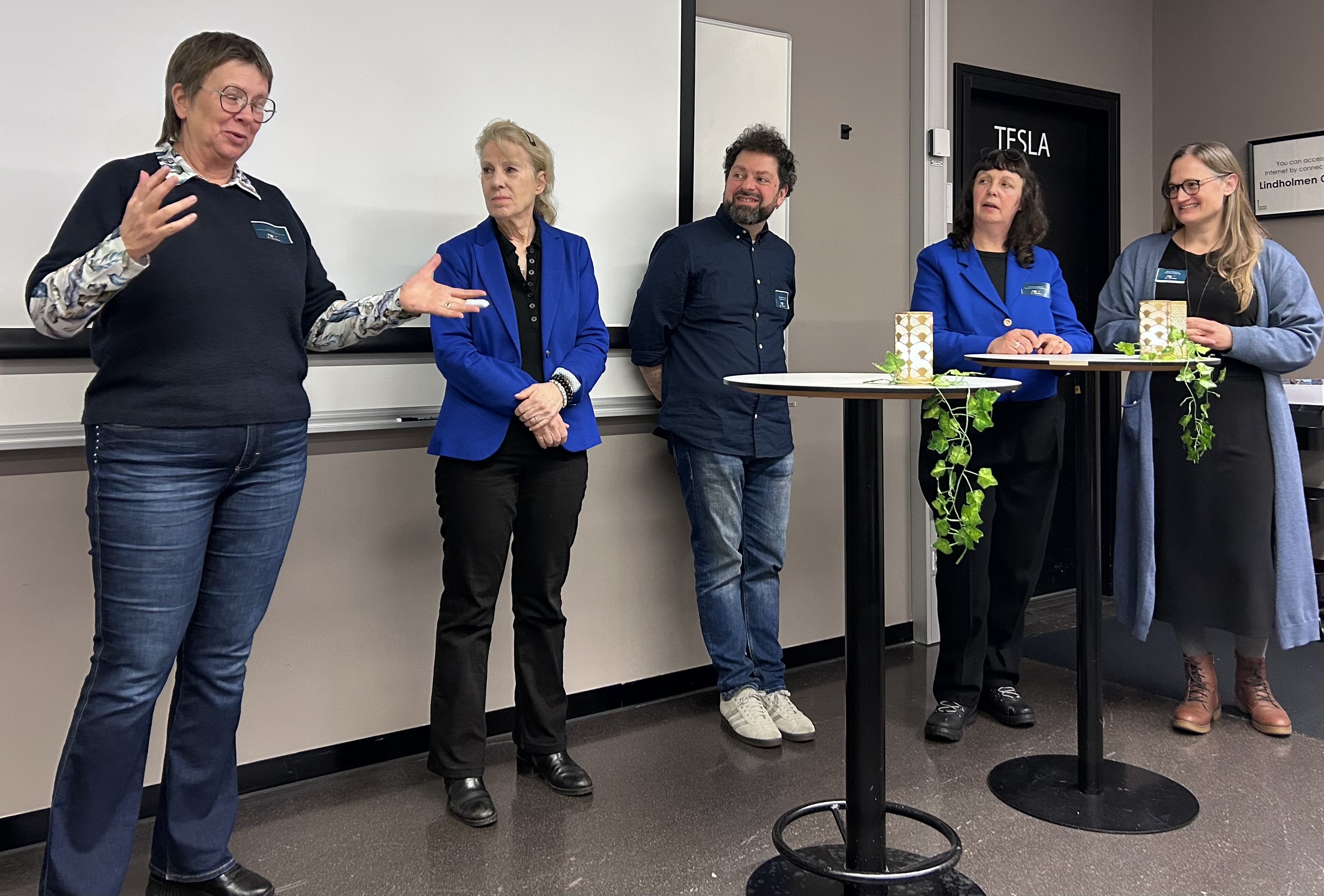
The panel dialogue with Carmelo D’Agostino (Lund University), Charlotta Johansson (Luleå University of Technology), Maria Håkansson (Guidance to Zero), Suzanne Falk (City of Gothenburg), and Sonja Forward (FOT) returned to several interconnected “system failures”:
- Maintenance is safety, but it falls between budgets. Operations/maintenance and new investments are often separated. The result is that what is “boring” but effective (maintenance) loses against what is visible (new builds), even though societal costs of poor maintenance show up elsewhere (e.g., healthcare, productivity loss).
- Municipalities need tools and mandate, but also clearer problem articulation. Research must “package” knowledge into usable tools, while municipalities need to be clearer in communicating real barriers and needs.
- Don’t forget rural and peri-urban environments. Walking and cycling are not only urban issues; standards and responsibilities on state roads and rural corridors must be part of the picture.
- Acceptance and language matter. Change meets resistance, and four-year political cycles drive short-termism. The need to involve the public more, work with norms, and use language that signals value (e.g., “active road users”/“valuable road users”) rather than framing it as a congestion conflict was highlighted.
- Systematics as a key word. There is momentum and a lot happening, but without systematic ways of working, follow-up, and learning, outcomes become uneven. A collaboration and learning platform (à la SAFER Cities) and better monitoring of “gains” were highlighted as ways forward.
 Poster session
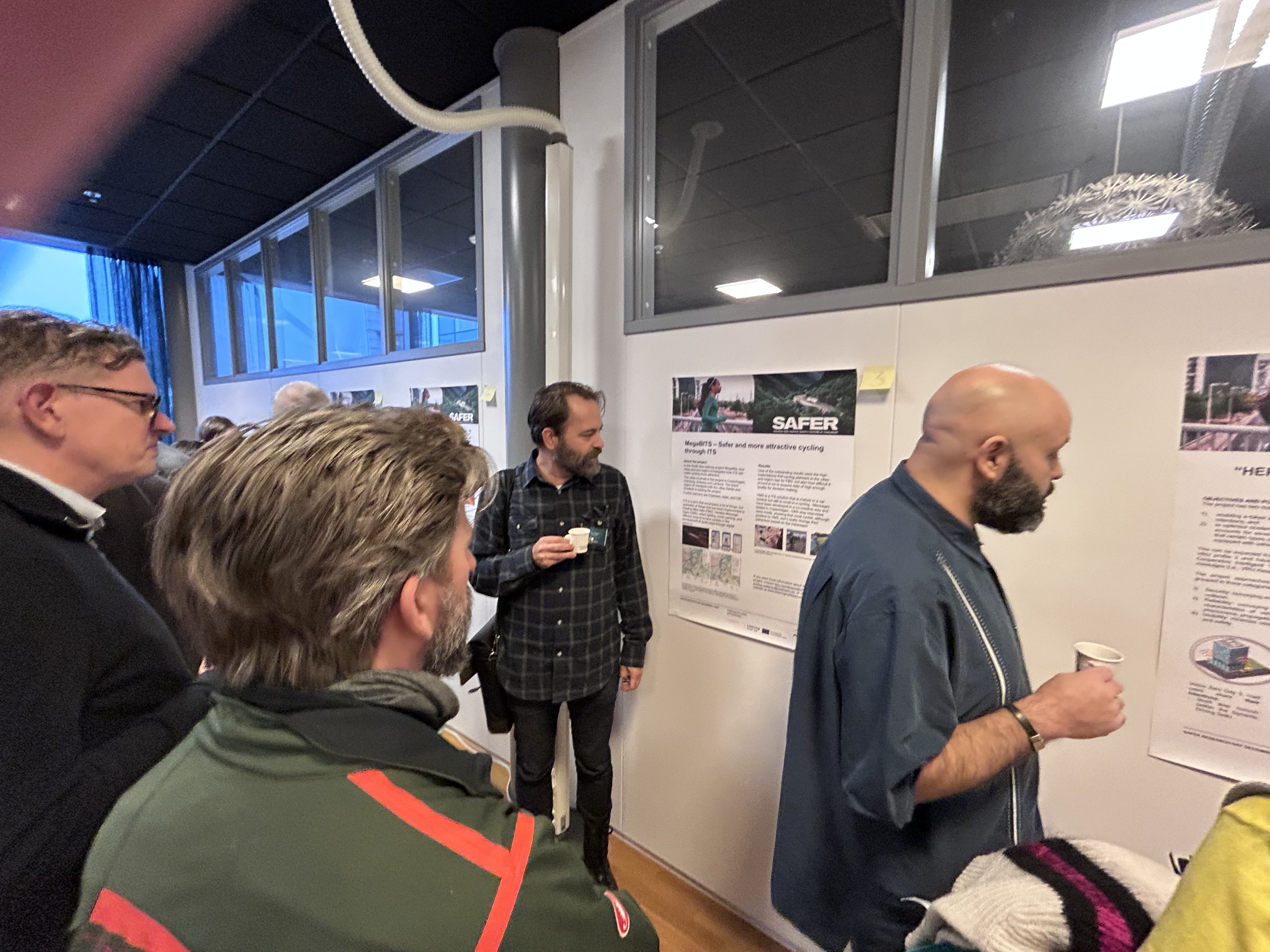
During the networking break a poster session was held, see the posters here (SAFER Inside, partners only!)!
Overall conclusion
The day made it clear that Vision Zero for pedestrians and cyclists is not a single technology or design question. It is a system mission that requires combining:
- people-centred design
- robust operations and maintenance
- evidence-based tools for municipal implementation
- stronger follow-up
- long-term governance and acceptance-building
The next SAFER Research Day was also announced: 20 January 2026, focusing on resilience and total defence in the transport system, followed by 28 April and 2 June 2026.