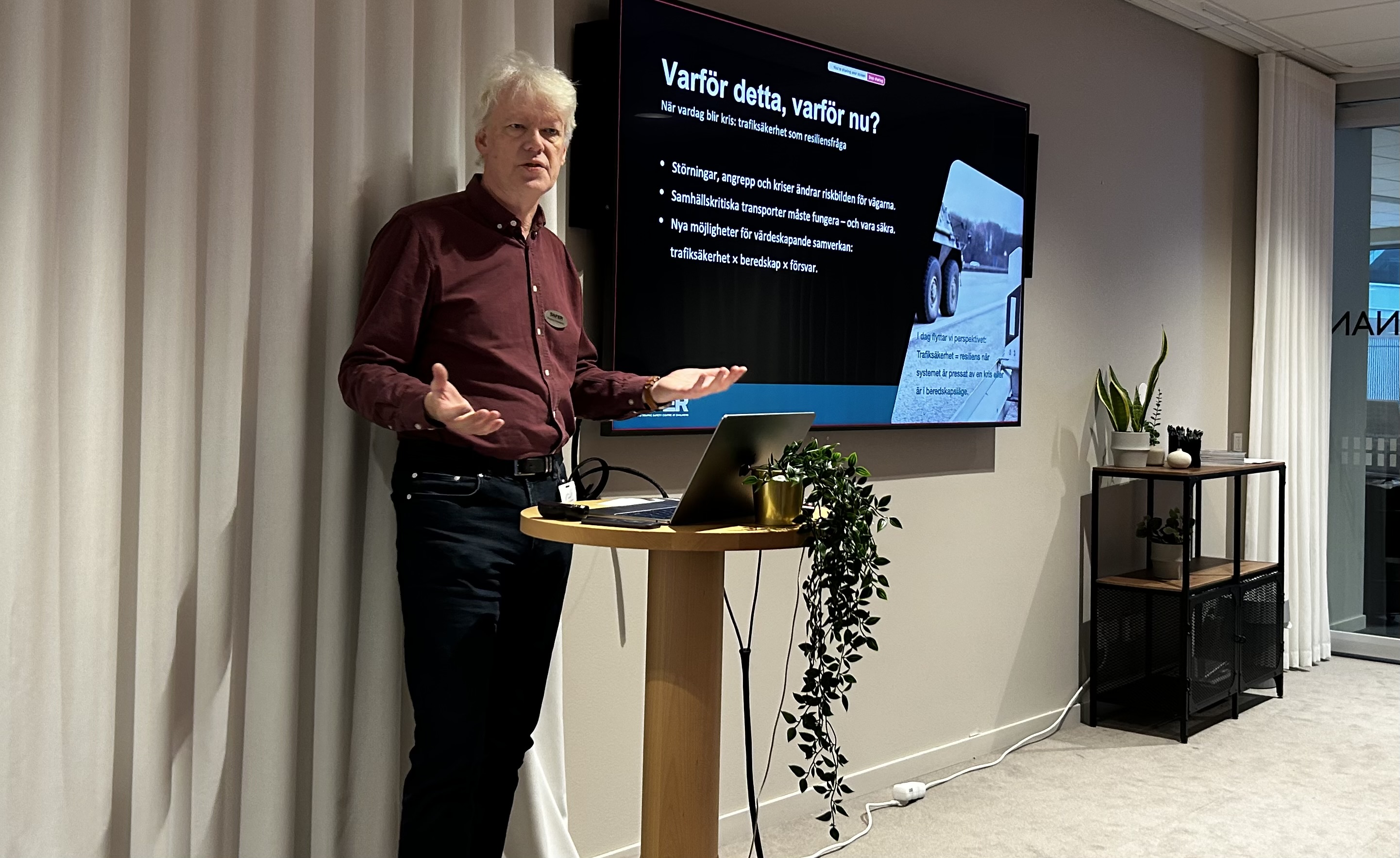
SAFER Research Day: Road safety in focus for resilience, preparedness and crisis response
On 20 January 2026, more than 60 participants from the total defence sector, industry, academia and wider society gathered at United Spaces in Gothenburg to strengthen road safety in the transport system during crises and heightened preparedness. The event, “Resilience and Defence in the Transport System – a New Role for Road Safety Research”, aimed to generate joint project ideas through the SAFER collaboration platform to help keep the transport system safe even when society is exposed to disruptions, attacks or crises.
Inspiration and collaboration throughout the day
The program combined inspiring talks with interactive workshops. During the morning, invited experts shared insights into how road safety can be maintained when everyday conditions shift into crisis mode. Johan Pihlström, Head of Road Safety at the Swedish Armed Forces, opened with the total defence perspective and highlighted current challenges and ways forward to strengthen preparedness. This was followed by presentations on freight transport resilience, Linea Kjellsdotter Ivert, VTI, transport system robustness during crises, Erik Jenelius, KTH, the private sector’s role in preparedness, Tania Dukic Willstrand, Combitech and how humans interact with technology in crisis scenarios, Anna-Lisa Osvalder, Chalmers.
After lunch, the workshops took over. In smaller groups, participants identified research and innovation questions to develop into new collaborative projects. The discussions were energetic and strongly cross-sectoral – very much in line with SAFER’s role as a platform connecting total defence, academia, industry and society.
Priority areas for emerging project ideas
Several promising project tracks emerged from the workshop, and here are some examples:
- Human behaviour in the transport system during crises: How do road users’ decisions and actions change when digital support fails, information is limited, or the traffic environment becomes chaotic?
- Safer military vehicles: How can military vehicles be designed and operated more safely, given that they often function under special exemptions and demanding conditions?
- Protection and support for professional drivers in crises: What can be done to better protect and support critical professional drivers (e.g., bus and truck drivers, emergency responders) who may need to operate under time pressure, stress and increased risk during crises?
Thanks and next steps
SAFER would like to extend a warm thank-you to everyone who contributed. Special thanks to Johan Pihlström from the Swedish Armed Forces for his valuable input, and to our four inspirational speakers for sharing perspectives that sparked new thinking and meaningful dialogue.
Next steps: SAFER's operational team and its partners will now continue by clustering the ideas generated during the day and shaping them into concrete research projects or and other knowledge building activities. The ambition is to translate the knowledge and momentum from the event into practical action. The SAFER platform will be used to develop the ideas into real collaborations and projects.
Stay tuned – the work towards a more resilient and road-safe transport system continues at full pace!