SAFER 20 years: collaboration that strengthens road safety
For 20 years, SAFER has brought together industry, academia, and the public sector around a shared goal: to generate knowledge, research, and solutions that enhance road safety. When partners gathered at Lindholmen Visual Arena to celebrate the anniversary, one message stood out: road safety is not created in silos, it is created through collaboration.
The year was 2006. At Chalmers, 20 stakeholders from industry, academia, and the public sector came together to create something that did not yet exist: a joint research arena where trust, collaboration, and societal benefit were the driving forces. This marked the beginning of SAFER, a collaborative platform that, two decades later, has helped position Sweden as a global leader in road safety research.
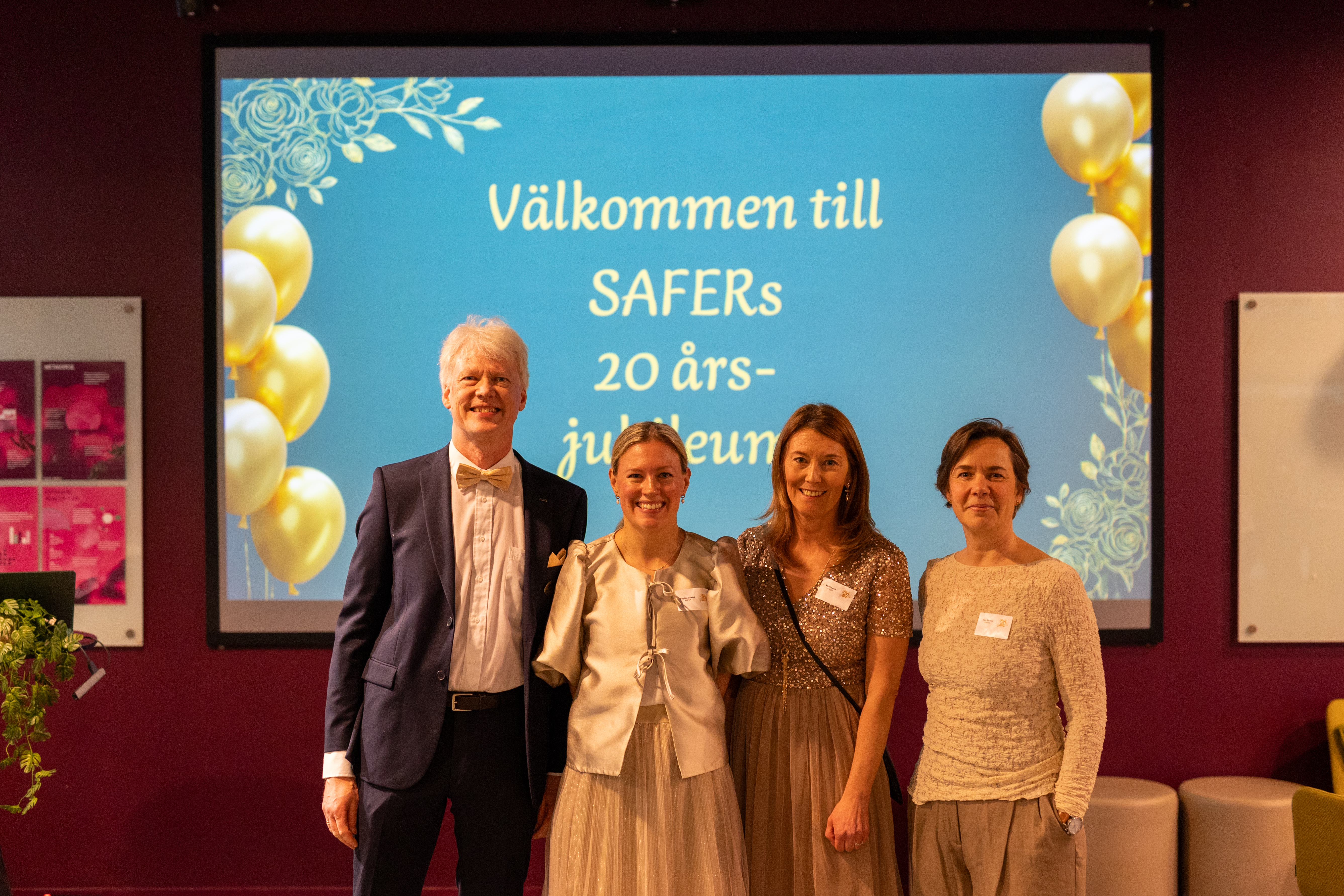
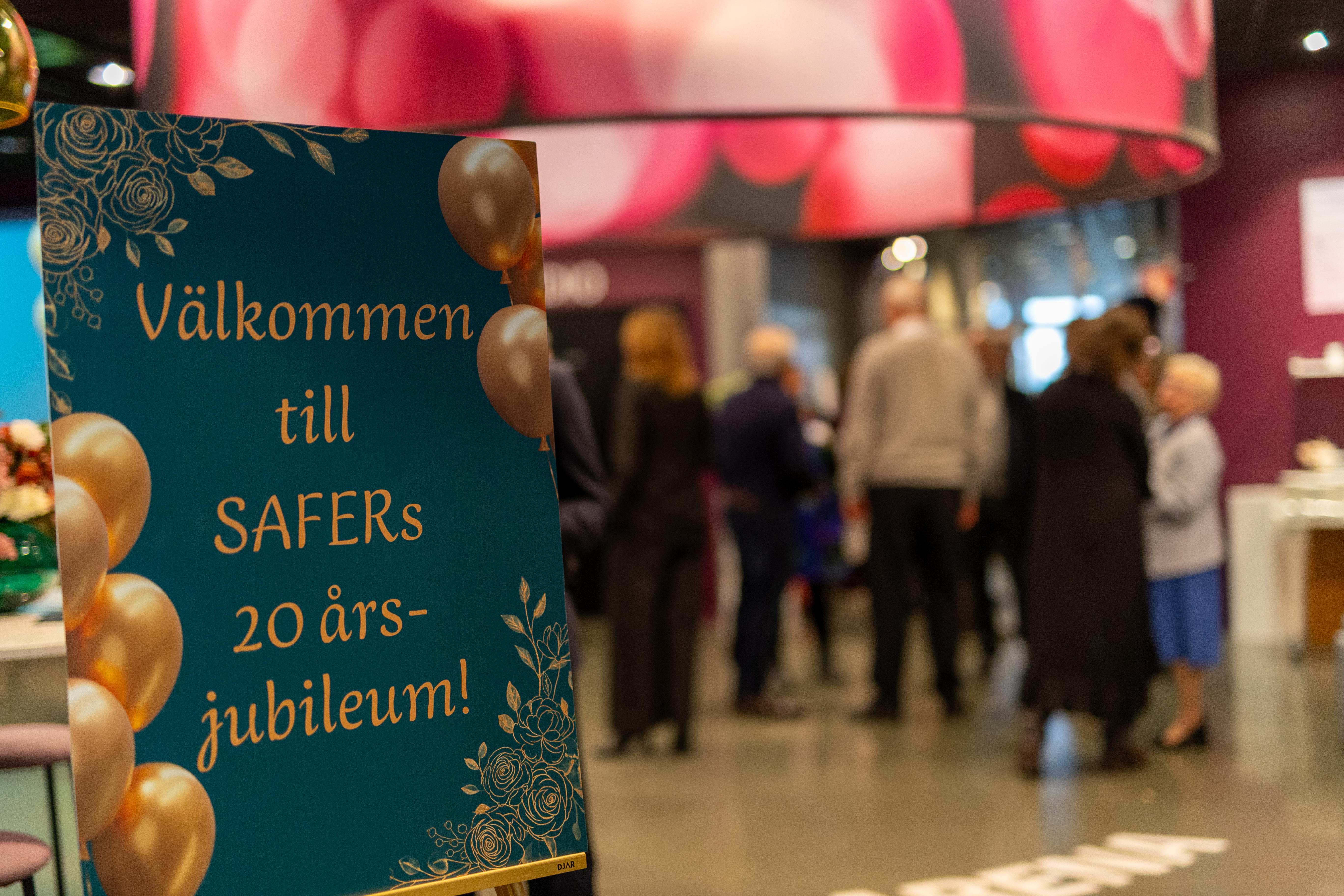
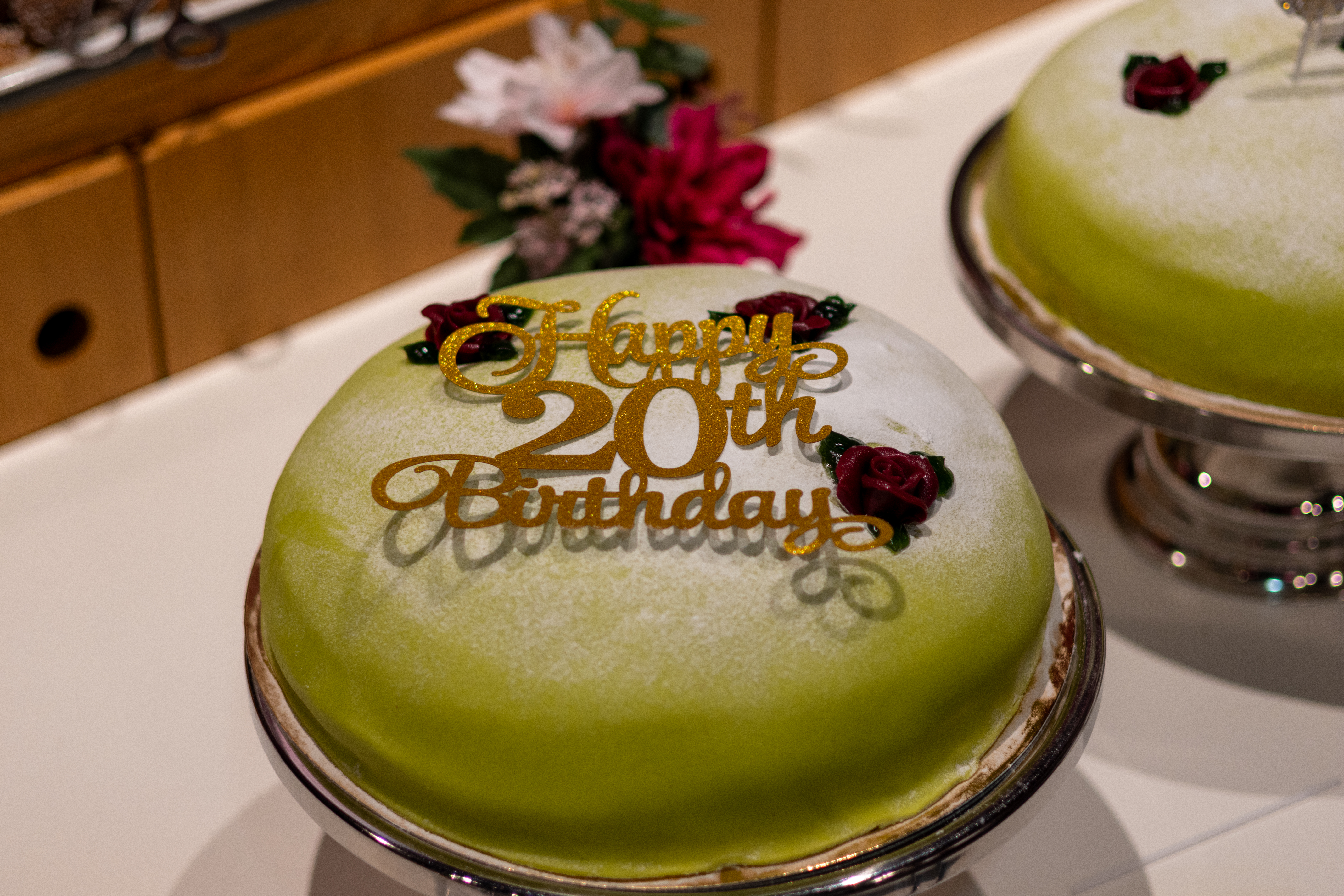
It was also here that the anniversary evening began, as the SAFER network gathered at Lindholmen Visual Arena to celebrate 20 years of collaboration, knowledge development, and shared direction.
The evening’s keynote speaker was Professor Anna Yström, an expert in inter-organisational collaboration for innovation at Linköping University, who has followed SAFER for many years. She described SAFER as a collaborative space between organisations, an “in-between space” where value emerges in the interaction between different actors, mandates, and perspectives. Drawing on how membership, learning, and delivery interact, she showed how SAFER has evolved over 20 years in response to new challenges and external needs. This ability to continuously renew the interaction between partners, she argued, is a key reason why SAFER has remained relevant over time.
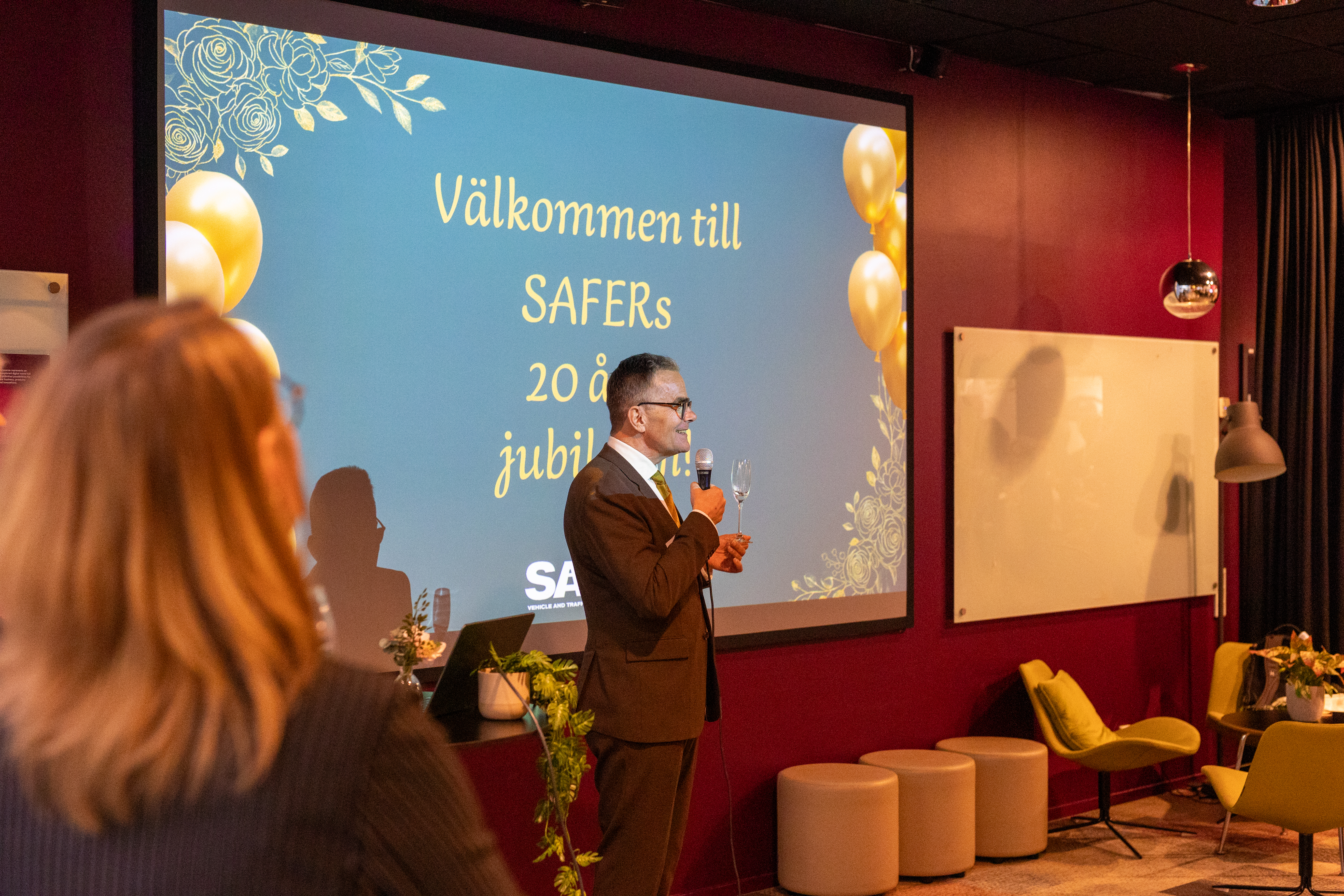
The host university, Chalmers, was represented by Mats Lundqvist, Vice President for Utilisation, who proposed a toast to SAFER and to the collaborative strength that has sustained the centre over two decades. He emphasised the importance of SAFER continuing to expand internationally, both to learn from leading actors outside Sweden and to further disseminate the knowledge generated within the centre on a global stage.
The audience then moved into the cinema, where a film summarised SAFER’s first 20 years. The story traced the journey from its origins to its role as a global voice, highlighting how SAFER has created research environments that have reshaped the field and generated knowledge leading to test arenas, international collaborations, policy contributions, and new technologies.
Over these two decades, SAFER has contributed to the development of Sweden’s first national crash database, taken part in global research contexts, initiated the world’s first conference on driver distraction, been involved from the outset in test environments such as AstaZero and ReVeRe, and driven progress in areas ranging from biomechanics and child safety to automation, AI, and behavioural research. Throughout, one core idea has guided the work: to jointly create value and knowledge beyond what any single partner can achieve alone.
The evening also included a lighter competitive moment, as the audience tested their SAFER knowledge in a Kahoot quiz. The winner was Kajsa Weibull, VTI.
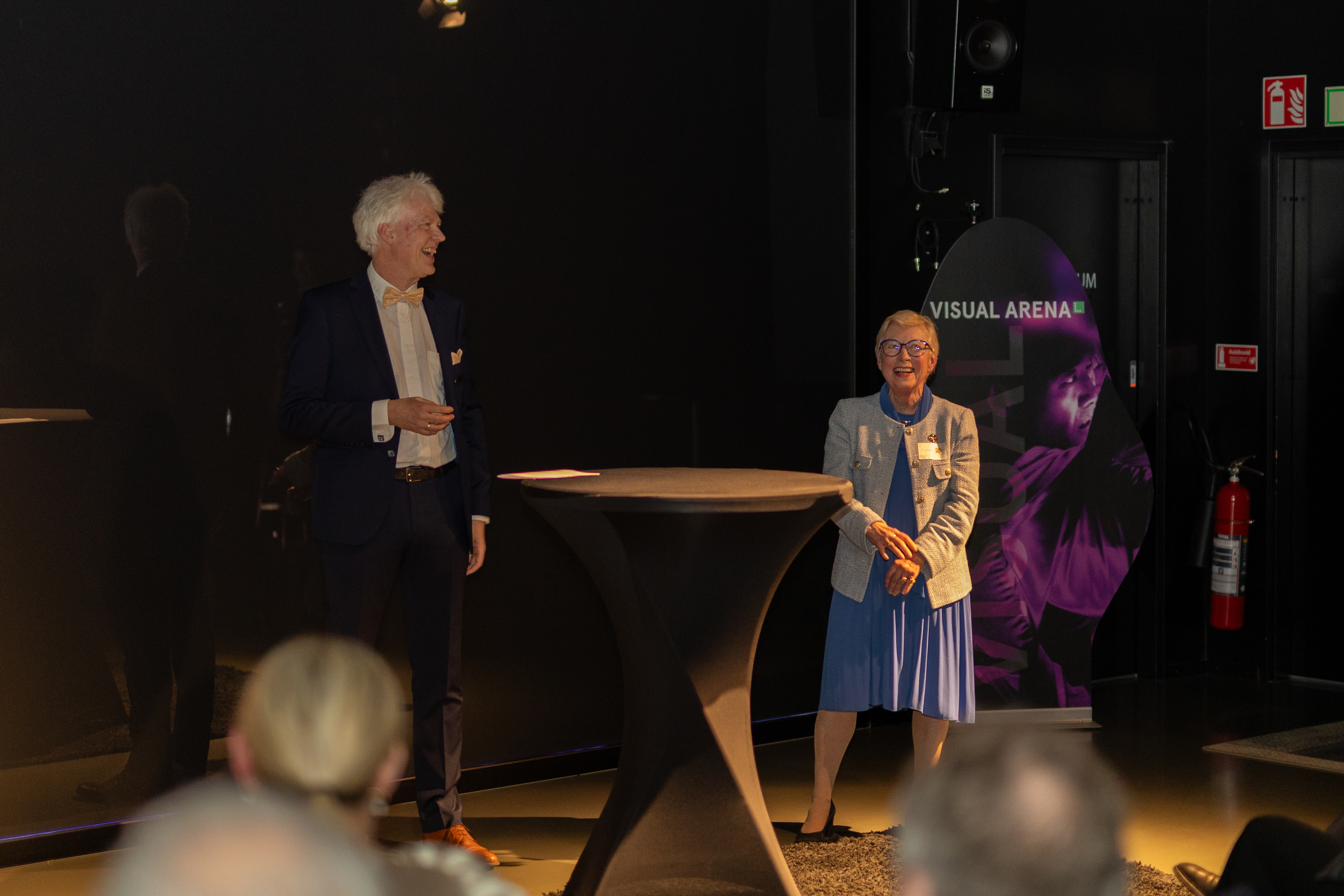
This was followed by a conversation with Anna Nilsson-Ehle, SAFER’s first Director, and Magnus Granström, the current Director. They reflected on SAFER’s journey, how collaboration is realised in practice, how road safety research has evolved over the past 20 years, and the challenges SAFER will need to address going forward. The discussion also touched on the platform’s leadership, its unique strengths, and the moments that best capture what SAFER has meant.
SAFER's deputy director Malin Levin challenged the Directors with the words:
"Over 20 years, SAFER has had only two Directors. That must say something. Is it simply so rewarding to be a Director at SAFER that no one wants to step down? Or does it above all reflect the strength of the platform itself, built on trust, long-term commitment, and relationships that truly stand the test of time?"
An important part of the evening was also the award ceremony, where distinctions were presented to recognise significant contributions within the SAFER community. As part of the 20-year celebration, individuals who have strengthened the platform through collaboration, leadership, and idea development were honoured.
The following individuals received awards:
- The SAFER Collaboration Award was presented to Paul Hemeren, University of Skövde.
- The SAFER Leadership Award was presented to Mats Svensson, Chalmers University of Technology.
- The SAFER Project Leadership Award was also presented to Mats Svensson, Chalmers University of Technology.
- The SAFER Idea Development Award was presented to Sanna Eveby, Guidance To Zero, and Maytheewat Aramrattana, VTI.
These awards reflect something fundamental in SAFER’s way of working. As a collaborative platform, SAFER is built on long-term partnerships, shared knowledge, and joint efforts between academia, industry, and public actors. The awards therefore not only celebrated individual achievements but also highlighted the value of engagement, leadership, and idea development in strengthening the collective ability to contribute to safer traffic environments for all.
The celebration concluded with a panel discussion where Claes Tingvall, Magdalena Lindman from If, Helena Strömberg from Chalmers, Anna Wrige from Volvo, and Mikael Ivari from the City of Gothenburg, together with moderator Magnus Granström, reflected on both the past and the future. The discussion focused on what has most significantly shaped the road safety field over the past 20 years, which perspectives need strengthening going forward, and what role SAFER can play in the next phase. Topics included technological shifts, system perspectives, data, the role of cities, the impact of research, and the future of mixed traffic systems.
 It was an evening that combined celebration with a strong sense of future responsibility. An evening that reminded everyone that over 20 years, SAFER has not only built projects, environments, and knowledge, but also a community.
Because that is where SAFER makes a difference: as a catalyst for collaboration that transforms research into real-world impact.
And perhaps this was also the clearest message of the evening:
Road safety is not created in silos. It is created through collaboration.