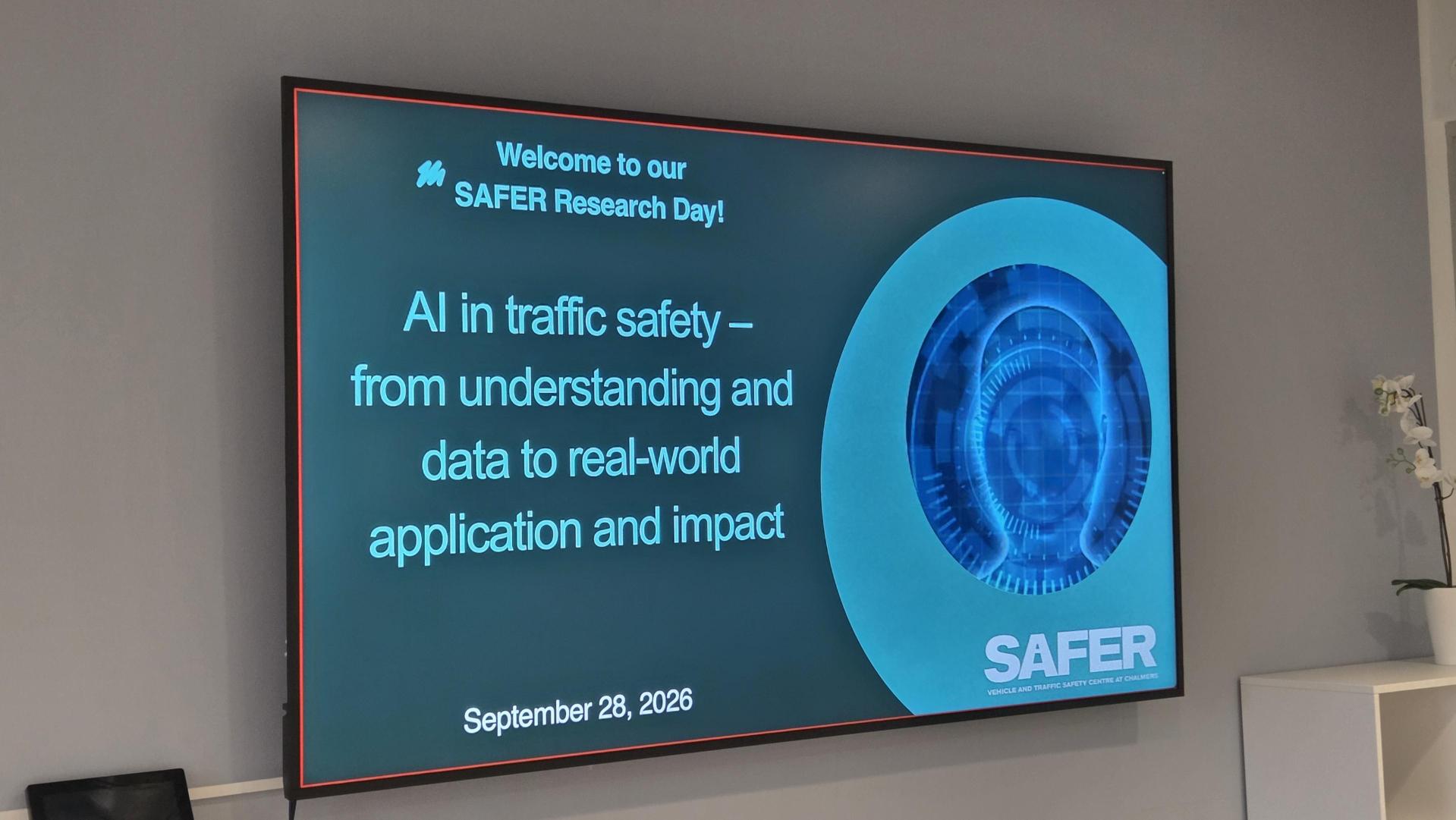
SAFER Research Day explored how AI can create real traffic safety impact
Around 80 participants joined SAFER Research Day on 28 September for a highly engaged discussion on AI in traffic safety – from understanding and data to real-world application and impact.
The program brought together researchers, industry representatives and public-sector actors to explore a question that cuts across many parts of today’s traffic safety work: when does AI actually create meaningful safety value – and what is required for us to trust and use it responsibly?
Across the presentations, project pitches and discussions, several clear themes emerged.
One was the importance of starting with the traffic safety challenge, not the technology. AI can be a powerful tool, but only when the problem, the data, the method, the validation approach and the intended decision are clearly connected.
A second recurring theme was data quality and representativeness. Many of the examples showed that AI performance is only as meaningful as the data and context behind it. Questions around rare events, edge cases, synthetic data, domain shift and how well training data reflects the real world are therefore central to future safety applications.
We also returned repeatedly to the question of validation and trust. High model accuracy is not enough on its own. We need to understand where a model works, where it may fail, what uncertainty remains and what happens when people or organisations act on its output. This also connects directly to the growing importance of traceability, governance and regulatory requirements for AI-enabled safety systems.
Another strong conclusion was that AI may help traffic safety work become increasingly proactive rather than reactive. Several projects demonstrated how AI can identify risk through infrastructure data, video analysis, near-miss events, connected vehicle data, driver behaviour and accident information – potentially allowing us to act before crashes occur, rather than only learning from them afterwards.
The human dimension was equally important. AI-enabled mobility systems do not operate in isolation. Safety depends on the interaction between people, technology and the surrounding environment, and successful systems need to support human performance rather than simply replace it.
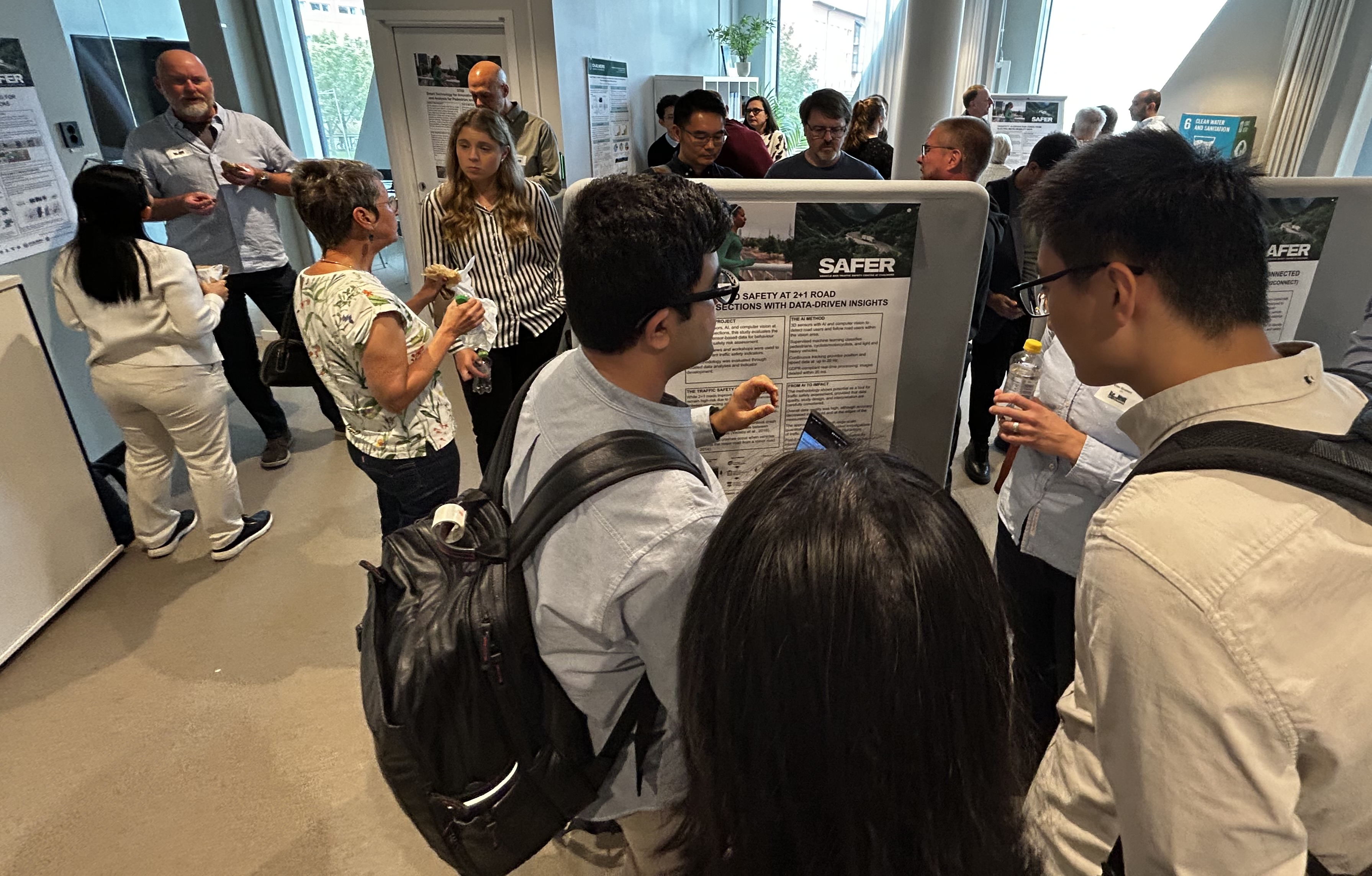 The lunch poster session became a real highlight of the day, with very lively discussions, new cross-connections between projects and extensive networking across organisations and disciplines. The format created exactly the kind of dialogue SAFER aims for – where project results become starting points for new questions, collaborations and shared learning.
Perhaps the strongest takeaway from the day was that no single organisation holds all the pieces. Data, methods, human-factors knowledge, regulatory competence, implementation capacity and real-world test environments are distributed across the SAFER community.
That creates a very clear opportunity for continued collaboration: to connect these capabilities, develop shared approaches to validation and evidence, explore how different data sources can be combined, and identify the research questions where joint efforts can create the greatest traffic safety impact.
👉 Presentation material from the day is available here!
A big thank you to all speakers, project teams and participants for contributing to such an open, insightful and collaborative Research Day at SAFER!