EARS
Full title: EARS – Enhanced Auditory Reality Scout
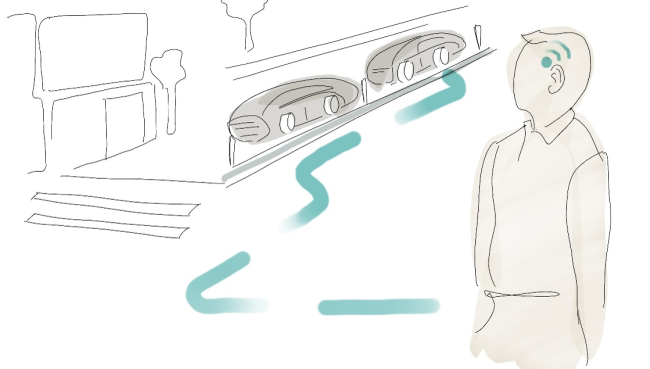
Automated shared mobility services, such as driverless shuttles and robotaxis, place new demands on how people interact with the system. Without a driver on site to guide or communicate with passengers, user interfaces must be designed to ensure safety, inclusion, efficiency, and a positive user experience. The EARS project explores how 3D audio can enhance these services. We examine opportunities across the entire door-to-door journey, design new audio-based user interfaces, and evaluate solutions in real-world settings. The project also investigates how mobility services can be linked with tourism experiences to create more engaging and memorable journeys. A particular emphasis is placed on how to adapt future interfaces for people with visual impairments, with the goal of improving accessibility. Project results include prototypes for mobile phones and vehicles, as well as research insights highlighting both the benefits and challenges of using 3D audio in next-generation mobility services. The project is funded by FFI, led by Volvo Cars, and carried out in collaboration with RISE, Ictech, Arctic Bath, and Polar Print.
EARS is a follow-up project to Sonic Interaction in Intelligent Cars (FFI), no. 2018-02730.
Traffic safety benefit: The project strengthens traffic safety by examining how different interaction solutions influence distraction and safety in shared automated mobility services. By studying these solutions, we gain deeper insights into which characteristics of audio-based interfaces enhance, or compromise, traffic safety.
Key words: Interaction design, user experience, sound design, safety, accessibility, shared mobility, self-driving vehicles, automated vehicles