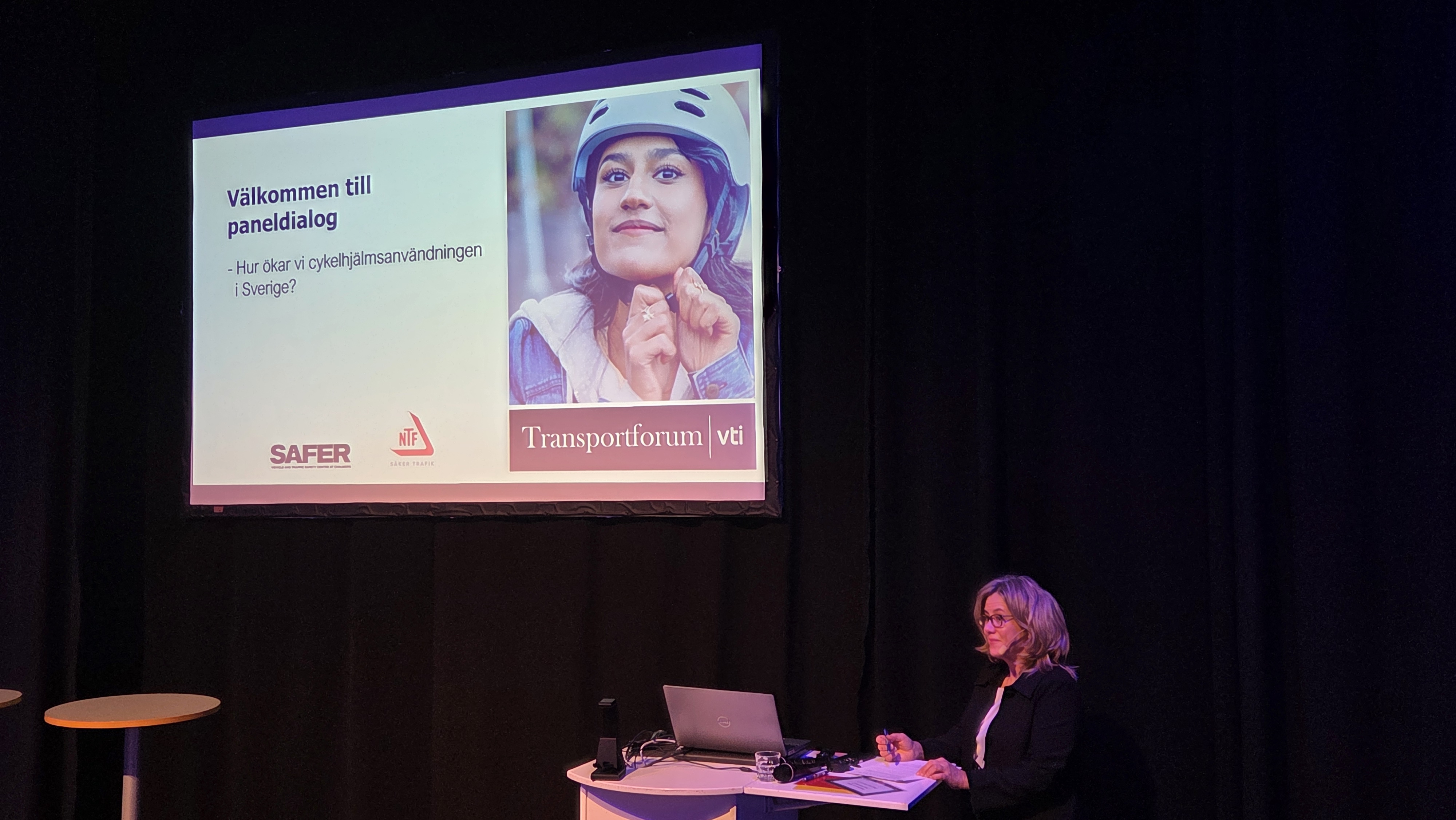
SAFER at Transportforum 2026: National push for higher bicycle helmet use
At Transportforum 2026, Sweden’s largest transport conference, NTF and SAFER hosted a session and panel dialogue on how to increase bicycle helmet use in Sweden. The session also marked the official start of a new Kraftsamling (joint national effort) to increase bicycle helmet use, led by NTF during 2026–2027 with funding from Skyltfonden/Trafikverket, and with SAFER contributing as a partner and a neutral arena for dialogue, collaboration, and building a shared way forward.
Why this matters – a few memorable figures from the session
The presentation highlighted that 2 out of 3 head injuries can be avoided if cyclists wear a helmet, and that helmets can reduce head injuries by 62% (and facial injuries by around 40%), based on Folksam studies of real-world cycling crashes.
At the same time, Sweden is not where we want to be: the ambition presented was 80% helmet use by 2030, while the level in 2023 was 47% (41% among adults, 69% among children).
Some additional “attention-grabbers” from the session:
- 130 cyclist fatalities during 2019–2024 (bicycles, e-bikes, and e-scooters).
- A striking norm-change example from Copenhagen: helmet use rose from 6% (2004) to 50% (2024), driven by factors such as awareness, availability and attractiveness, and campaigns where humour also played a role.
What the audience believed would be most effective
Participants voted on which measures they believed would have the biggest impact. The top options were:
- Mandatory helmet law
- More stylish/comfortable/functional helmets
- Better knowledge about the consequences of head injuries
These were followed by behaviour change campaigns and reward/discount models, then loan helmets for rentals and cheaper helmets.
Challenges raised in the discussion
A key takeaway was that this is fundamentally a behaviour and norms issue: identity, habits, and “not wanting to stand out” matter - alongside practical barriers such as comfort, convenience and appearance.
The session also highlighted knowledge gaps and compliance issues related to e-scooters: in an NTF survey (2023), 33% did not know that children under 15 must wear a helmet when riding an e-scooter, and in observations (2024) 57% of children (assessed as being covered by the helmet law) were not wearing a helmet.
Speakers and panel – who took part?
Speakers in the session:
- Malin Lundgren, NTF Väst – welcome and introduction
- Agneta Berlin, NTF Fyrbodal – why the issue matters
- Patrik Spång, Gullers Grupp – communication for behaviour change
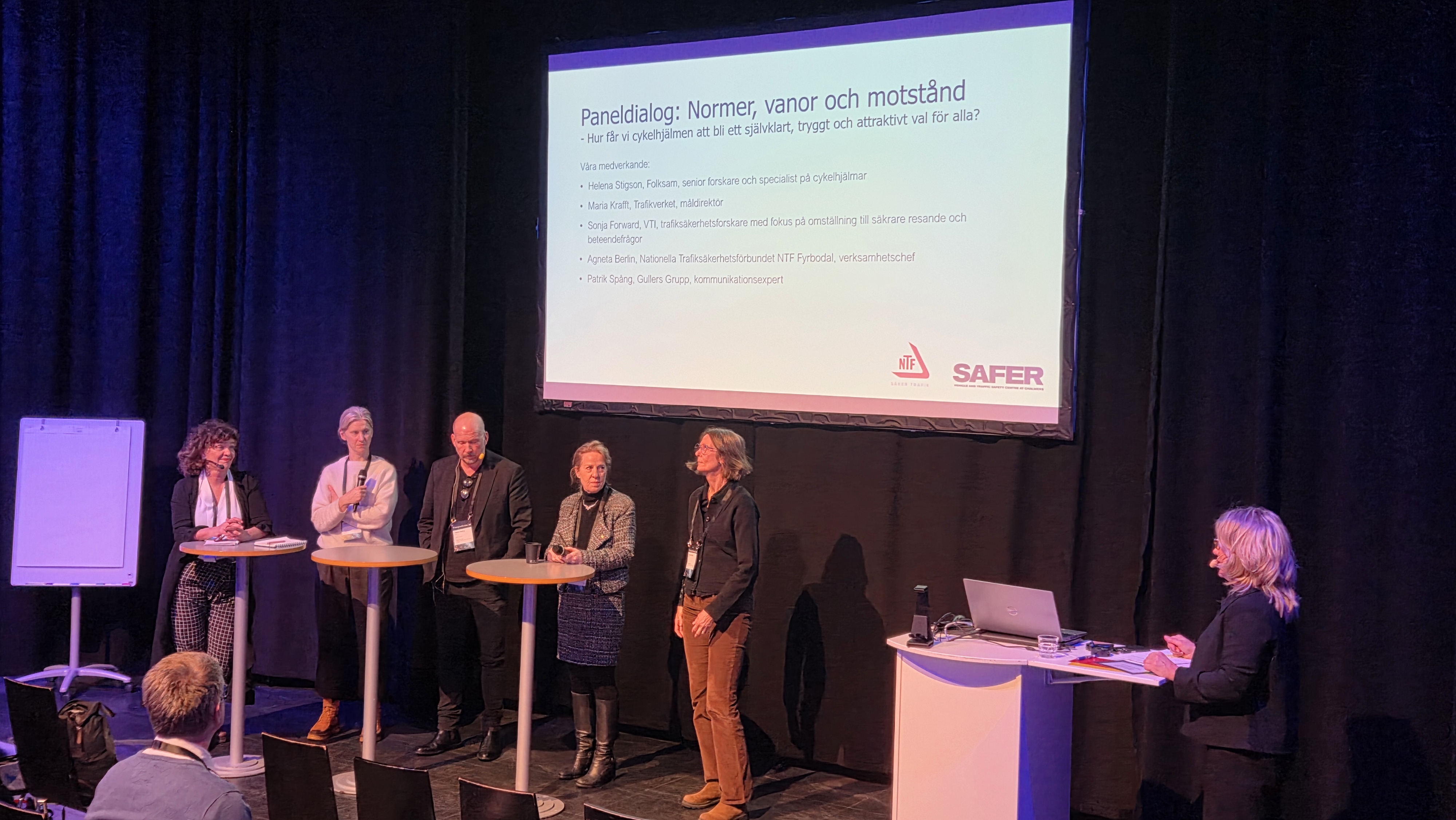 Panel dialogue (Norms, habits and resistance):
- Helena Stigson, Folksam – senior researcher and helmet specialist
- Maria Krafft, Swedish Transport Administration (Trafikverket) – Director of Road Safety
- Sonja Forward, VTI – road safety researcher (behavioural change)
- Agneta Berlin, NTF Fyrbodal – Managing Director
- Patrik Spång, Gullers Grupp – communication expert
Next steps: from kick-off to joint action
The panel dialogue served as a first joint “starting shot” to map what is already being done, identify what is missing, and connect actors who want to contribute to making helmet use a social norm—a natural, attractive choice for more people. Through the Kraftsamling, municipalities, regions, companies and other organisations are invited to take part, with SAFER continuing to provide a neutral arena to bring perspectives together and accelerate progress.