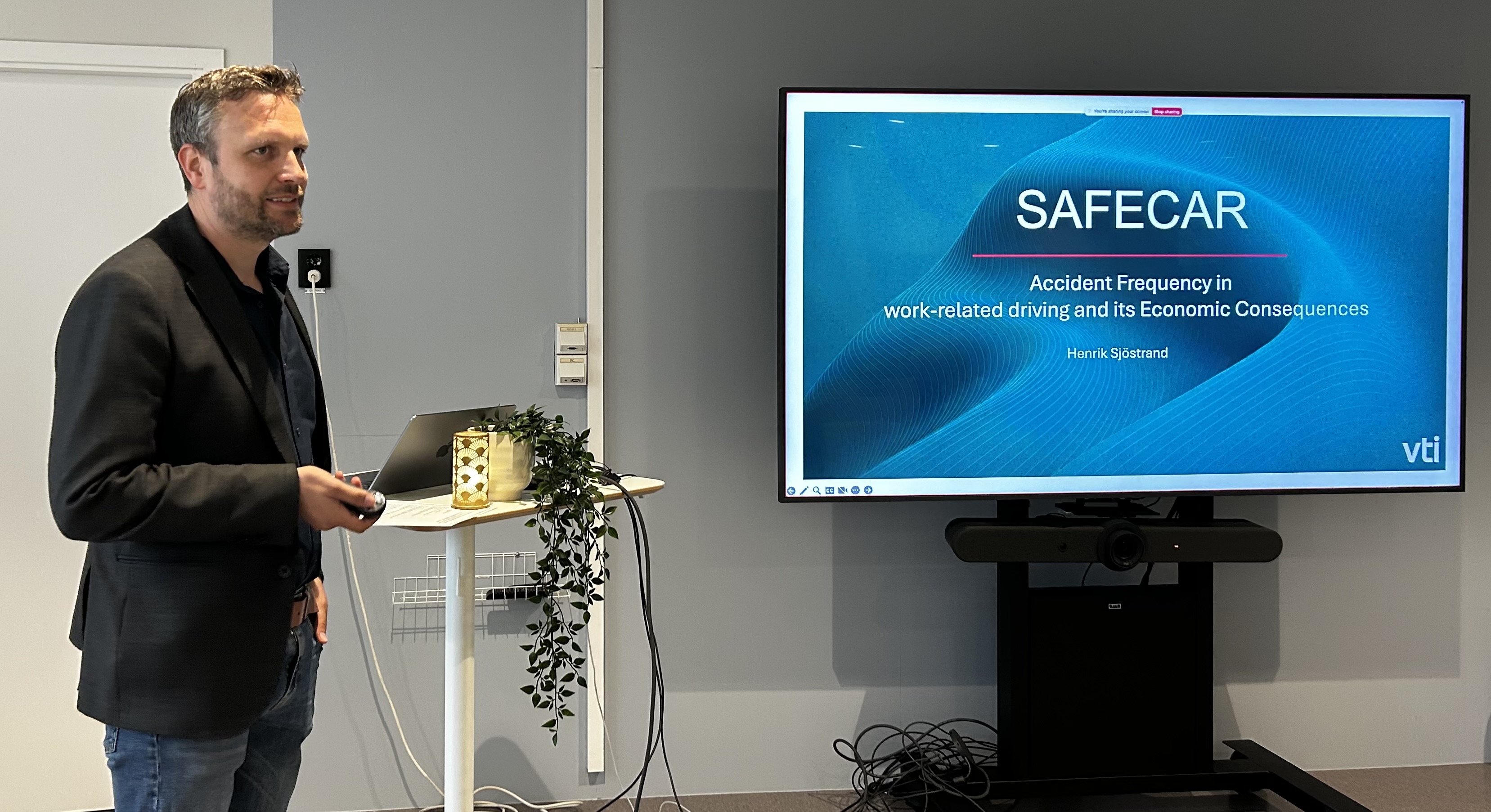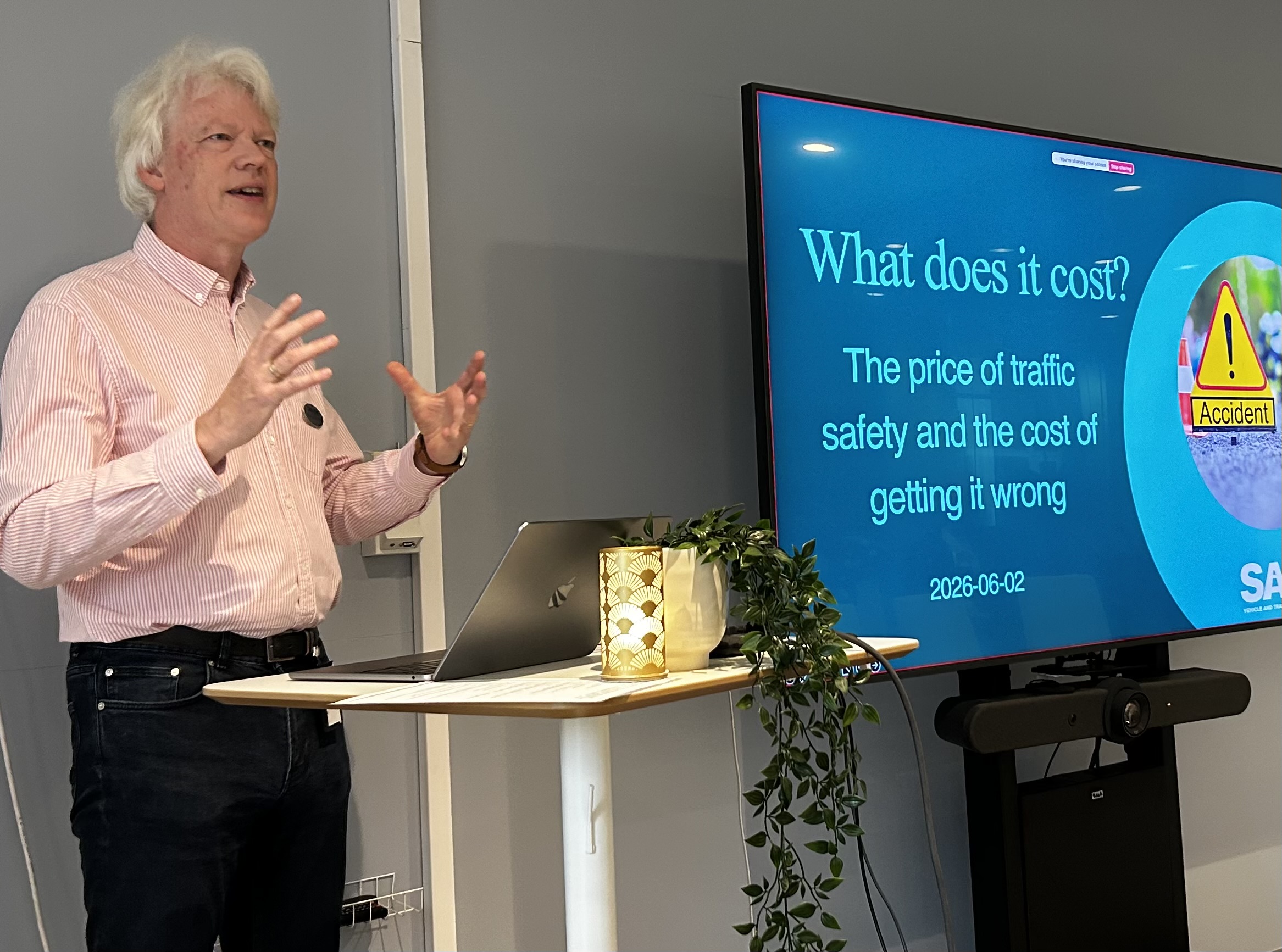
What counts? SAFER Research Day explored the true cost of traffic safety
Can Sweden afford to reach Vision Zero? One clear message from SAFER Research Day was that the real question may be whether we can afford not to.
At SAFER Research Day on 2 June, researchers, authorities, industry representatives and practitioners gathered to discuss how road safety is valued, measured and prioritised in real-world decision-making.
A recurring message throughout the day was that what gets measured gets prioritised. But several speakers also showed that many important costs are still difficult to capture, communicate and translate into action.
Reaching Vision Zero is an investment, not just a cost
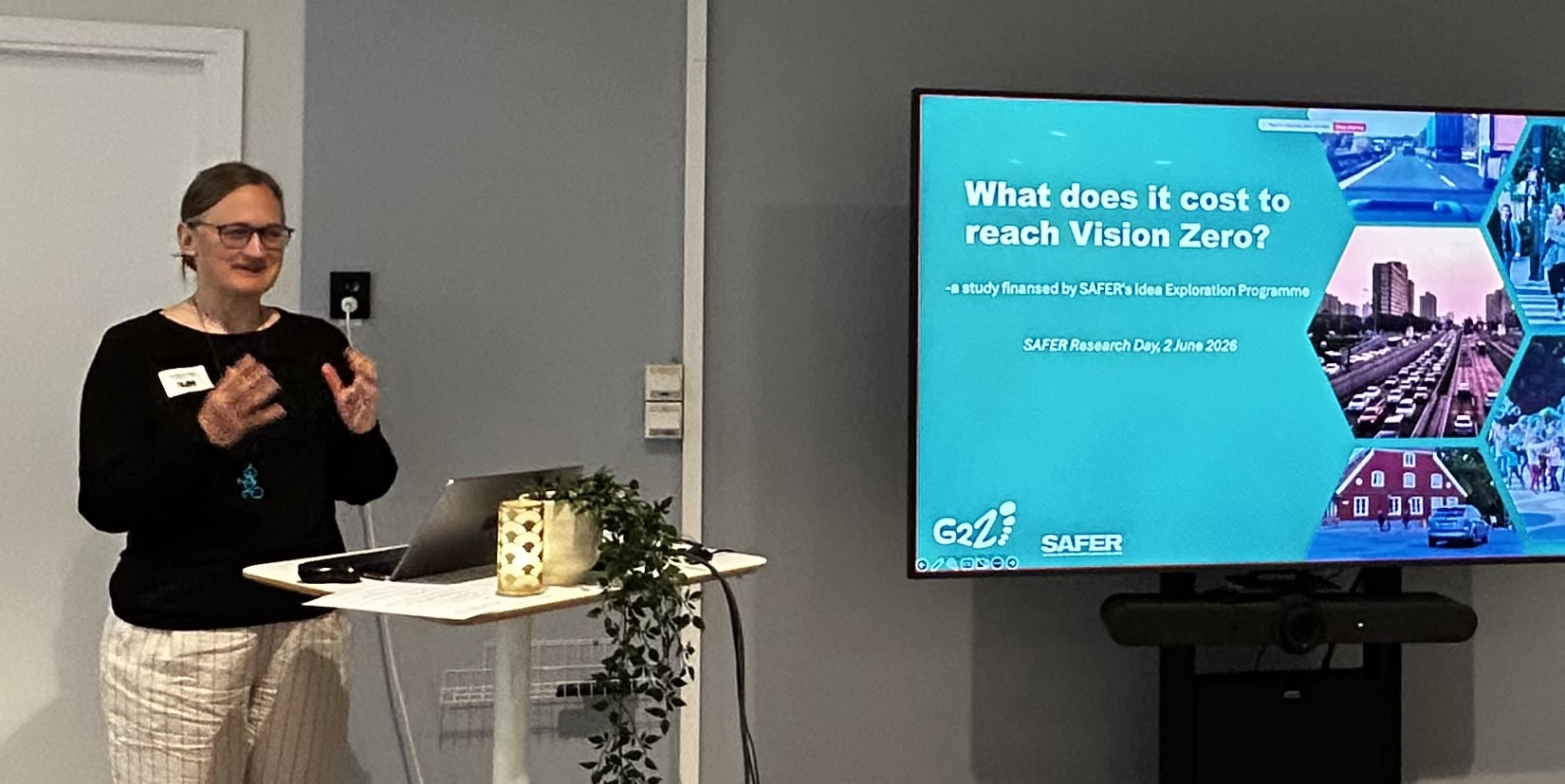
One of the day’s most concrete contributions came from Maria Håkansson, Guidance to Zero, who presented calculations on what it would cost to implement the infrastructure measures needed to reach Sweden’s road safety targets.
Her presentation made an important point clear: compared with the societal costs of road crashes and serious injuries, investing in safer infrastructure is not an unrealistic burden. It is a highly relevant and economically defensible investment.
In other words: Sweden can, to a large extent, pay its way towards Vision Zero through targeted infrastructure investments.
This message became an important reference point for the rest of the day. If we know which measures work, and if the costs of not acting are high, the key challenge is not only technical or economic. It is also about decision-making, responsibility and priorities.
From facts to decisions
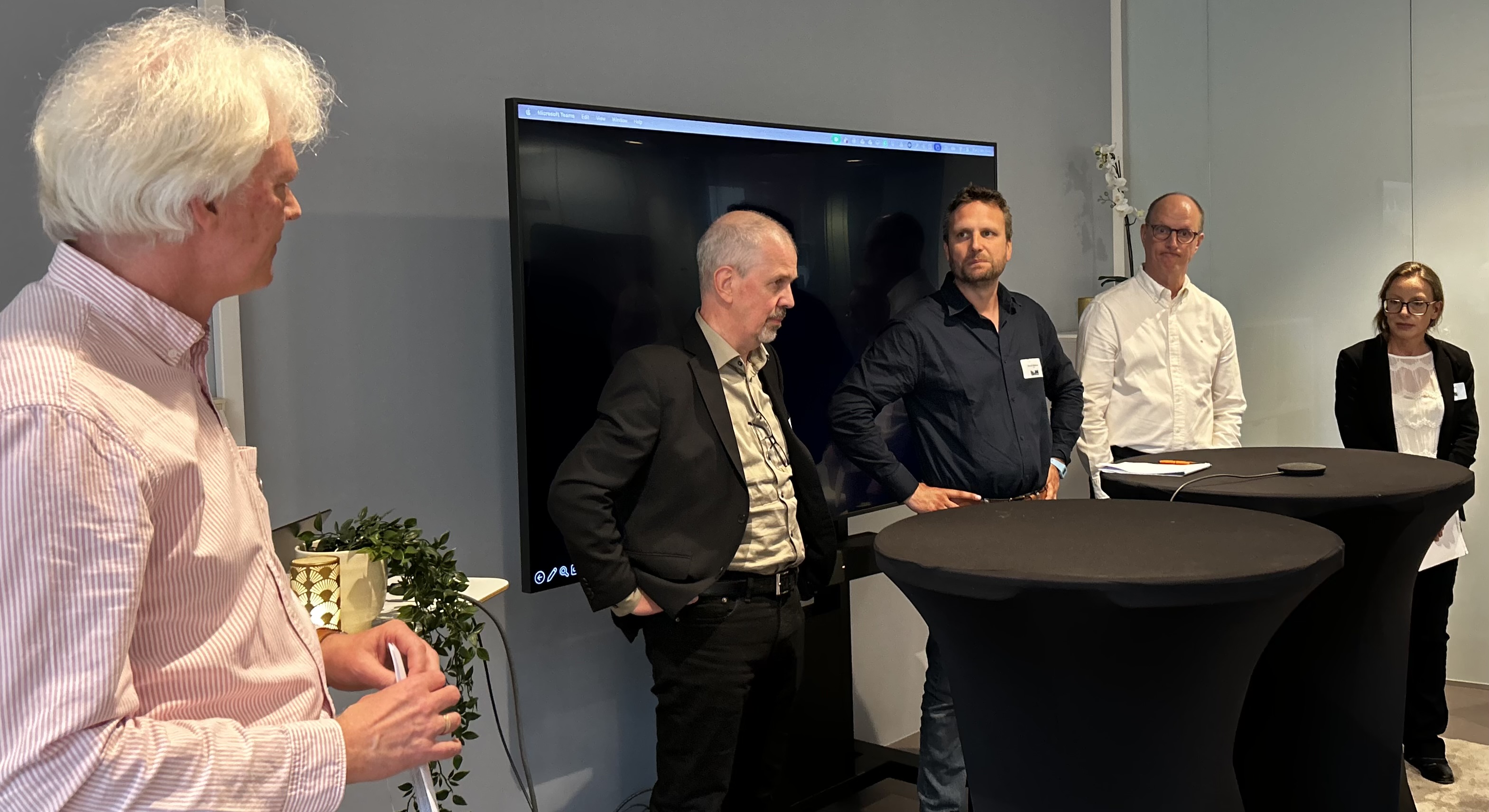
The panel discussion highlighted a central challenge: how do we move from knowledge and calculations to actual decisions?
Several conclusions stood out. First, transparency is essential. If economic arguments are to support better road safety decisions, actors need a common framework, shared assumptions and comparable methods.
Second, findings need to be shared more widely. Knowledge that remains within individual projects, agencies or organisations will not be enough to shift priorities.
Third, even when costs are calculated, the question remains: who is actually expected to pay? The societal benefits of road safety may be clear, but investments are often required from specific actors, such as municipalities, employers, vehicle manufacturers or national agencies.
This gap between who pays and who benefits remains one of the most important barriers to action.
The political cost of safety decisions
Another important point from the panel was that some road safety decisions carry a political cost, even when the evidence is strong.
Speed management is one example. Measures such as lowering default speed limits can be highly relevant from a safety perspective, but may be politically difficult to implement.
The discussion also pointed to a possible difference between local and national willingness to act. Local governments may, in some cases, show a higher willingness to pay for concrete safety improvements than national decision-makers, particularly when the local benefits are visible and close to citizens.
This raises an important question for future work: how can evidence be communicated in ways that make politically difficult decisions easier to take?
Hidden costs still need to be made visible
Several presentations showed that current models and decision frameworks do not always capture the full consequences of traffic crashes.
Important costs include:
- long-term consequences after serious injuries
- quality of life losses
- productivity loss and reduced work capacity
- organisational and employer costs
- work-related traffic risks
- the real-world effects of ADAS and automated driving
A strong theme throughout the day was that non-fatal injuries deserve more attention. Fatalities are often well captured in economic models, but serious injuries can lead to lifelong physical, cognitive, psychological and social consequences.
Final reflection
The day showed that the economic case for road safety is strong. But better calculations alone will not be enough. The next step is to connect facts with decisions, costs with responsibility, and evidence with action.
Or, as one of the key messages from the day could be summarised:
What we count shapes what we prioritise. But what we share, explain and act on is what ultimately saves lives.